


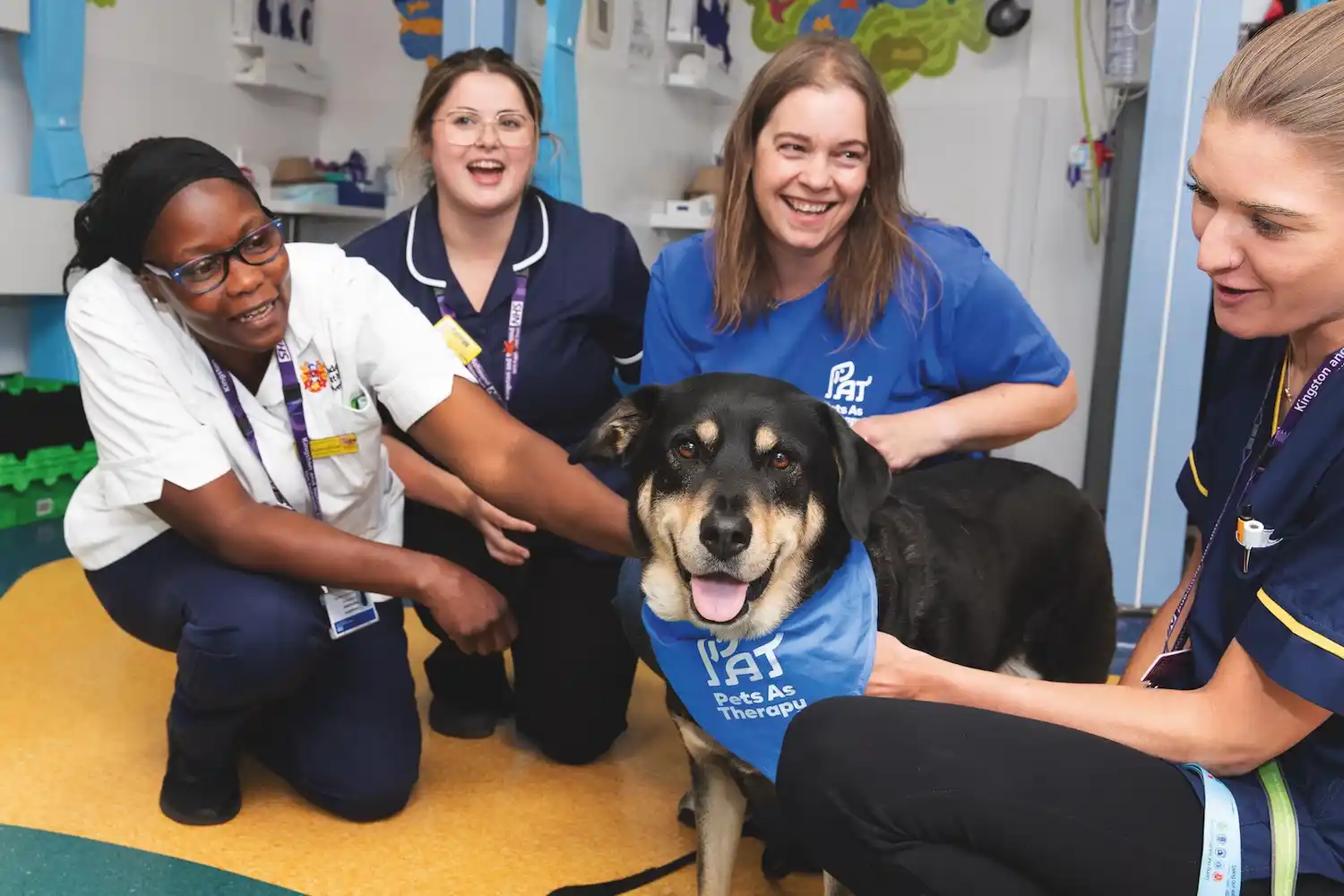
Andrea McHugh reports on the rewarding role of Pets As Therapy dogs
Pets As Therapy was founded in 1983 and over the past 40 years has provided thousands of people with comfort and unconditional love at times when it was needed most. Today volunteers and their registered pets visit all kinds of facilities across the UK, including hospitals, hospices, care homes, schools and prisons. The idea is simple, Pets As Therapy (PAT) connects generous pet owners and their incredible animals with those people who could really use a lift. The joy that is spread is far reaching, not only benefiting the people who are visited, but also the volunteers, and the pets themselves.
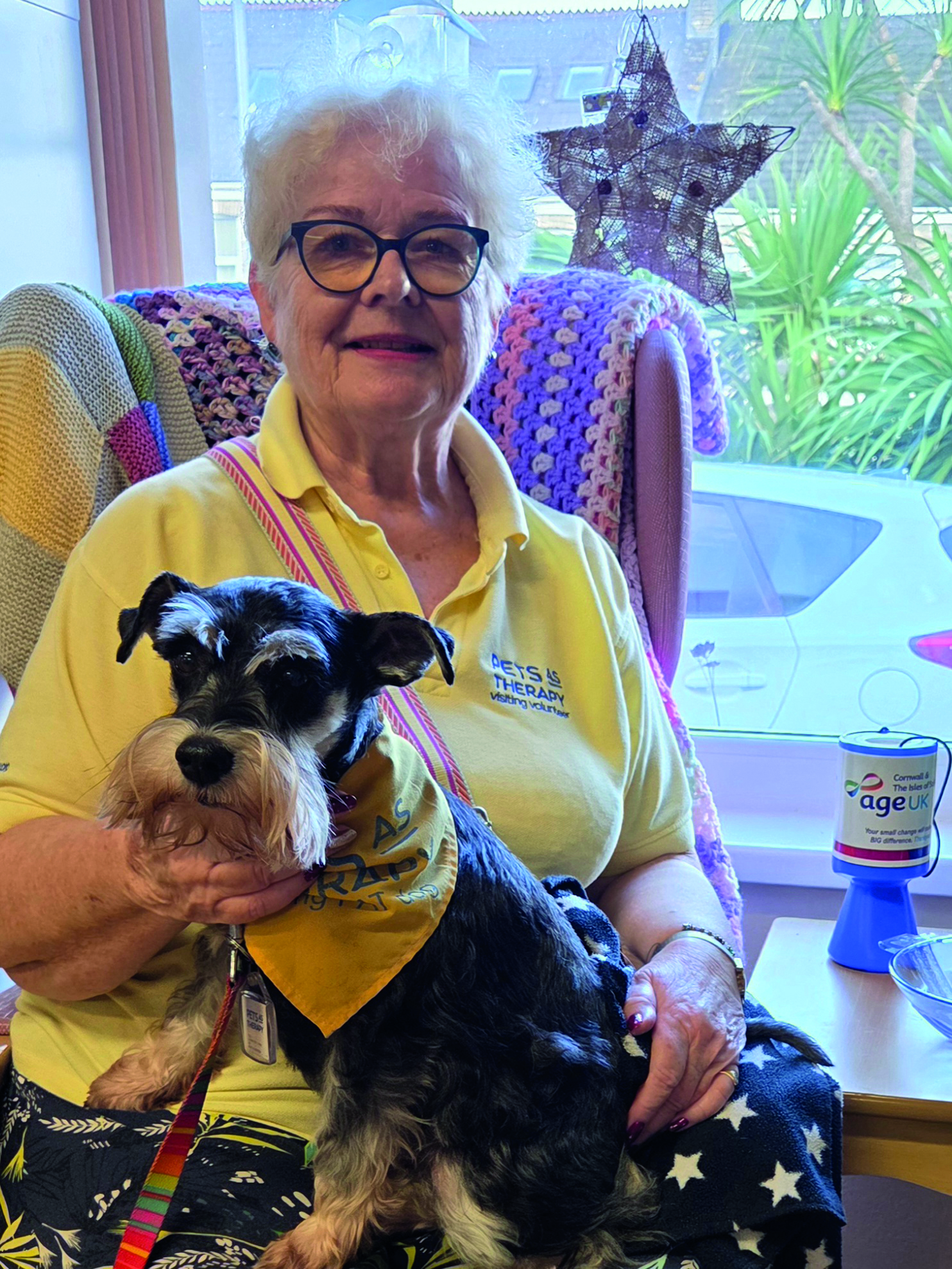
Meet Aggie
Lesley Irvine is a PAT volunteer who lives near Newquay in Cornwall with her Miniature Schnauzer, Aggie. Aggie is now almost 10 years old and goes out with Lesley several times a week to visit various community organisations and meet different people.
“I originally got Aggie to keep my older dog company,” Lesley recalls. “When I first went to see Aggie at two weeks old, it was a case of her choosing me as she just came straight to me and fell asleep in my arms. I fell in love with her there and then, and ever since she’s been a gentle little dog who loves cuddles. When I retired from work, I decided I wanted to find something worthwhile to do that would keep me busy, so we joined Pets As Therapy and did the assessment, which Aggie passed with flying colours. The assessment took about 90 minutes, and tested things like how the dog will react to new people, new dogs, new places and loud noises, etc. The handlers are interviewed as well to make sure they will be a good match and can cope with being a volunteer.
“The minimum age for a dog to be a PAT dog is one year, and they have to have been with their owner for at least nine months. Aggie was 18 months old when we first qualified, and our first job was to start visiting a local care home. We still visit there most weeks and enjoy meeting any residents who are downstairs in the lounge area. Afterwards we go upstairs and meet any residents who might want a cuddle with Aggie but for one reason or another have been unable to come downstairs. Aggie loves her visits, and we are very much a team. I chat to the residents, and between us we try to provide a little bit of mental stimulation to brighten their day. I can tell that Aggie loves it because she trots in the door really happily and can’t wait to get lots of attention. She’s never been interested in treats... to Aggie it’s all about the cuddles!
“After a while we also started visiting an Age Concern Memory Café for people with dementia, and we’ve made a big difference to people’s lives there. At first the people we met were quite insular and not really connecting with each other or engaging much but after Aggie started to meet them regularly and sitting on their laps there was a big difference. Now there are people who remember her from visit to visit and look forward to her coming. She definitely puts a smile on people’s faces, and one gentleman even confided that he really didn’t like dogs very much, apart from Aggie!
Stress buster
“After the Covid pandemic a friend of mine started taking her PAT dog to the local hospital and so we joined her. I think there are three or four dogs that visit regularly. It’s quite a busy place, and Aggie and I go once a week to visit the wards as well as A&E, and the radiotherapy and chemotherapy departments. We tend to go on the same days, so we often see the same people as they progress through their weekly treatments, which is nice. Aggie can really help to ease their anxiety and has even sat on someone’s lap whilst they were having chemotherapy. Everyone at the hospital knows her and says hello and smiles at her. I think Aggie provides some much-needed stress relief for the staff as well as the patients.
“Pets As Therapy advise that you don’t visit for longer than two hours at a time because the dogs can get tired and they do pick up on emotion and anxiety, so it’s a good idea to not expose them to it for long periods. When we go to a ward, I take a clean little blanket with me and Aggie is allowed to sit on the beds. Recently she sat on a bed with a gentleman, and they just stared deep into each other’s eyes for about ten minutes, and somehow this really helped ease his worries. Silent communication can be very powerful. Aggie and the other dogs who visit provide comfort, and sometimes all that is needed is for them to curl up next to someone for a few minutes.
Home comforts
“When we get home, Aggie is often a bit tired and likes to have a good snooze! I’ve made lot of friends from being a PAT volunteer, and sometimes a few other PAT team members will get together and go to each other’s houses with the dogs and have coffee and a bite to eat, or we organise a group dog walk. It’s great fun.
“When Aggie is working, she wears her PAT coat so that people know where she is from, but once inside I take her coat off and she just wears a PAT bandanna. This means that people can fully enjoy the sensation of stroking her, which is very important.
“If anyone is interested in becoming a PAT volunteer, and they have a dog that really loves people, I would highly recommend it. It’s such a worthwhile thing to do and makes a huge difference to people’s lives. It’s made a big difference to my life as well.
“I am incredibly proud of Aggie, who is just wonderful. In her spare time, she likes to run on the beach or sit and look out of the window at home to do a bit of birdwatching. But in all honesty, Aggie is at her happiest when she’s close to me and having cuddles. And that’s what makes her a perfect PAT dog.”