


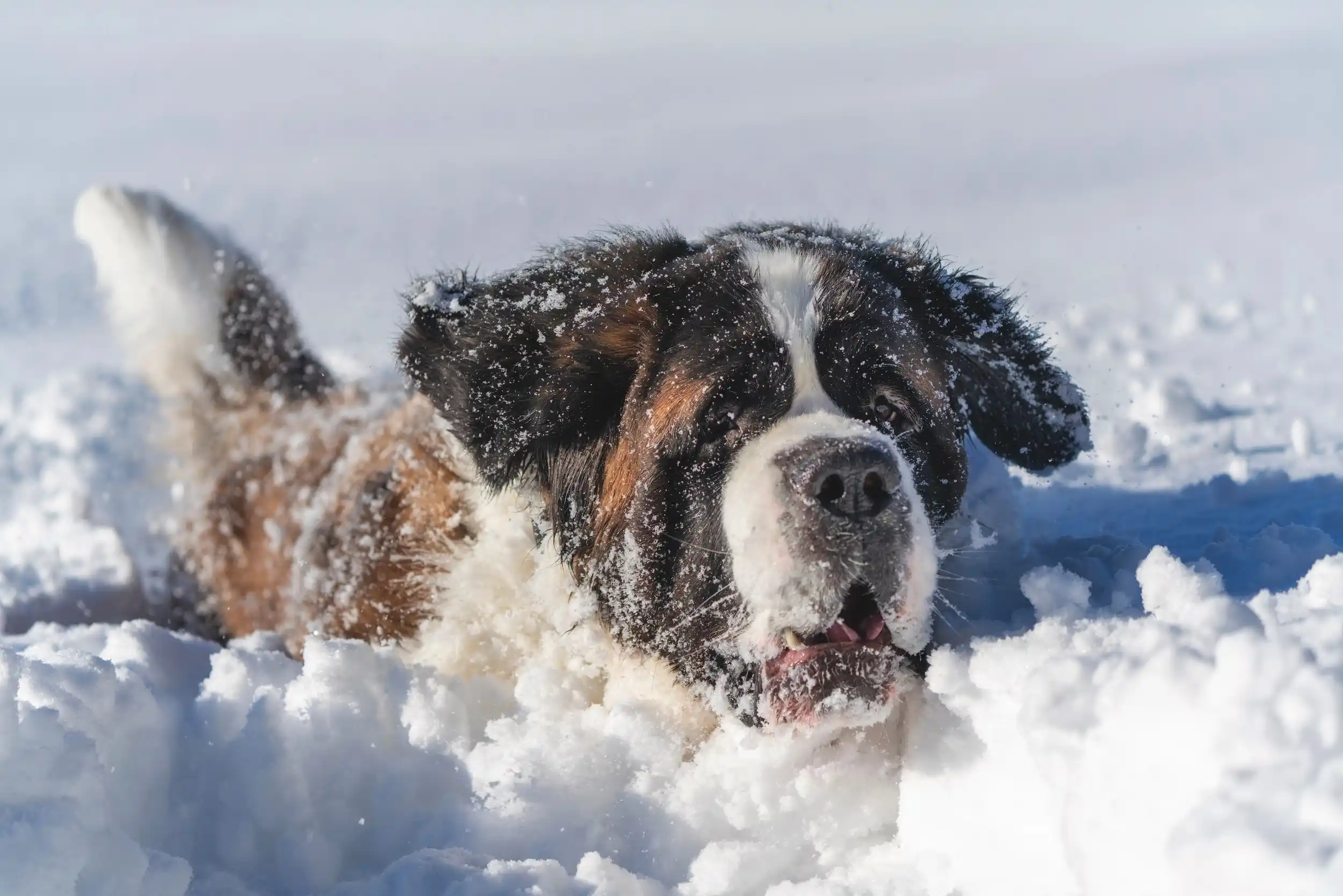
The St Bernard is one of the most recognisable, biggest, and gentlest dog breeds. With his massive jowled head, kind eyes, and powerful build, the St Bernard has become an enduring symbol of courage, loyalty, and strength
A little bit of history…
The St Bernard’s story begins in the eighteenth century, high in the Swiss Alps, where monks at a remote hospice bred powerful dogs to help rescue travellers lost in snow and storms. Records from 1774 show these dogs were already being used for search and rescue.
Their fame spread quickly. For a time they were known as Good Samaritan Dogs, celebrated for their ability to locate stranded travellers and lead them to
safety. It’s estimated that more than 2,000 lives have been saved by St Bernards over the centuries.
One remarkable dog, Bamse, became a wartime hero. Serving aboard a Norwegian minesweeper during the Second World War, he helped keep order among sailors and even escorted shipmates home from the pub at closing time. When Bamse died in 1944, local schools in Montrose closed so children could attend his funeral. His grave there is still honoured today.
And their character?
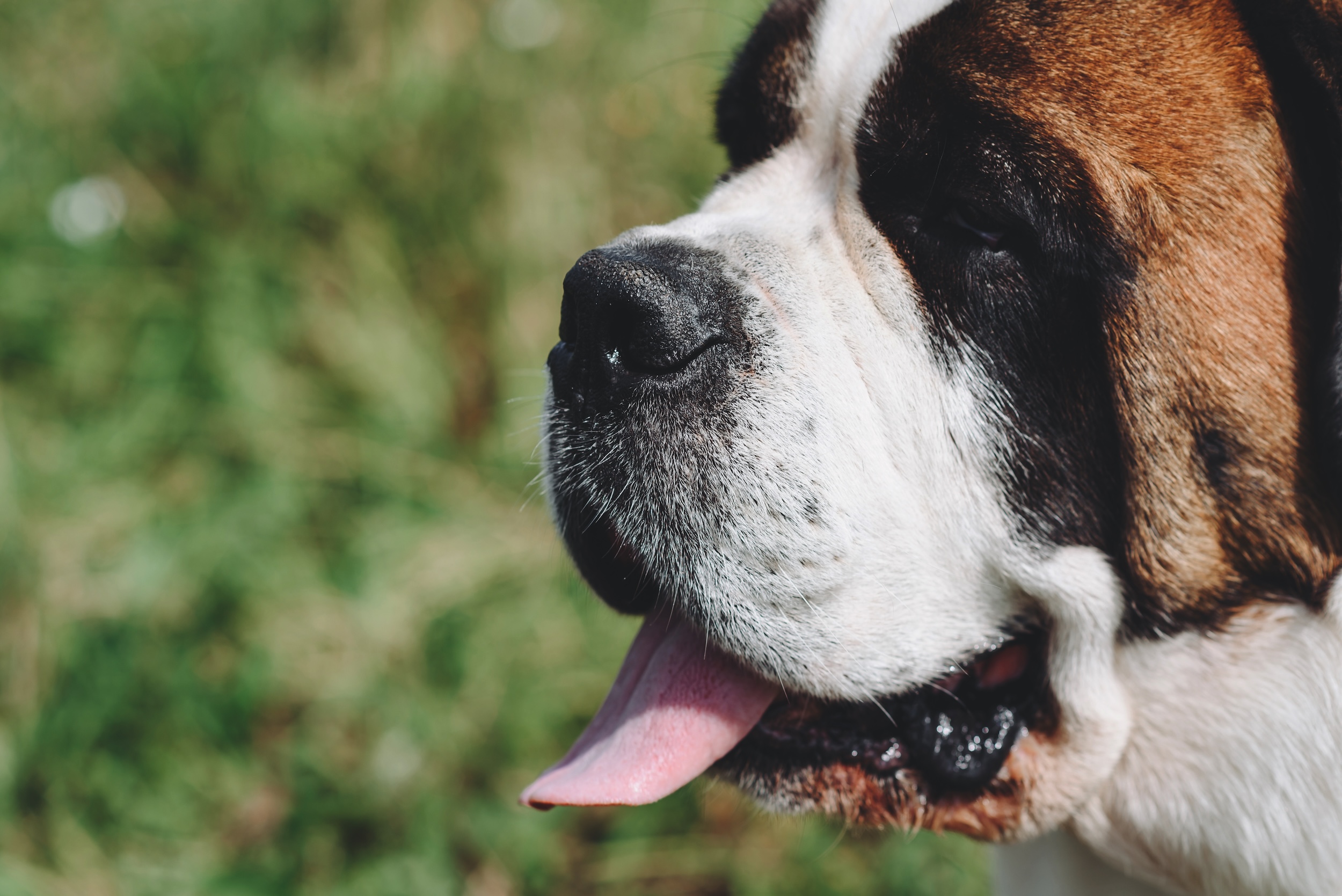
The St Bernard is a true gentle giant. Calm, affectionate, and endlessly patient, they have a natural affinity with children and a loyal devotion to their families. Despite their size, they are rarely aggressive, though they will defend their home and loved ones if necessary.
They are steady thinkers and quick learners when trained with kindness
and consistency. However, they can be stubborn and slow to respond if handled harshly, so gentle encouragement works best. Their placid nature makes them wonderful companions but also means they mature slowly, both physically and mentally.
Will they fit my lifestyle?
These dogs are best suited to homes with plenty of space, ideally with access to a garden or countryside walks. They don’t need long runs but do enjoy daily exercise to keep fit and prevent stiffness.
St Bernards are extremely social and thrive on company; they do not like to be left alone for long periods. Their size and strength mean early socialisation is essential, especially while they are growing rapidly as puppies.
Families will find them affectionate and tolerant, though supervision with very young children is wise simply due to their bulk. They are happiest when part of family life and will quietly follow you from room to room.
Do they take long to groom?
St Bernards have dense, weather-resistant coats that need regular brushing to remove loose hair and prevent tangles. Both short and long-coated varieties shed heavily, especially during seasonal changes.
Bathing should be occasional but thorough, and it’s worth keeping a towel handy… these dogs drool generously! A quick daily wipe of the mouth and coat can keep things manageable.
Are they healthy?
Like most giant breeds, St Bernards can suffer from joint and bone problems such as hip and elbow dysplasia. Choosing a puppy from health-tested parents can greatly reduce these risks.
Because of their size, they also have shorter-than-average lifespans and are prone to issues like bloat and heart problems. A careful diet, steady growth in puppyhood, and moderate exercise are vital for keeping them healthy.
In a nutshell
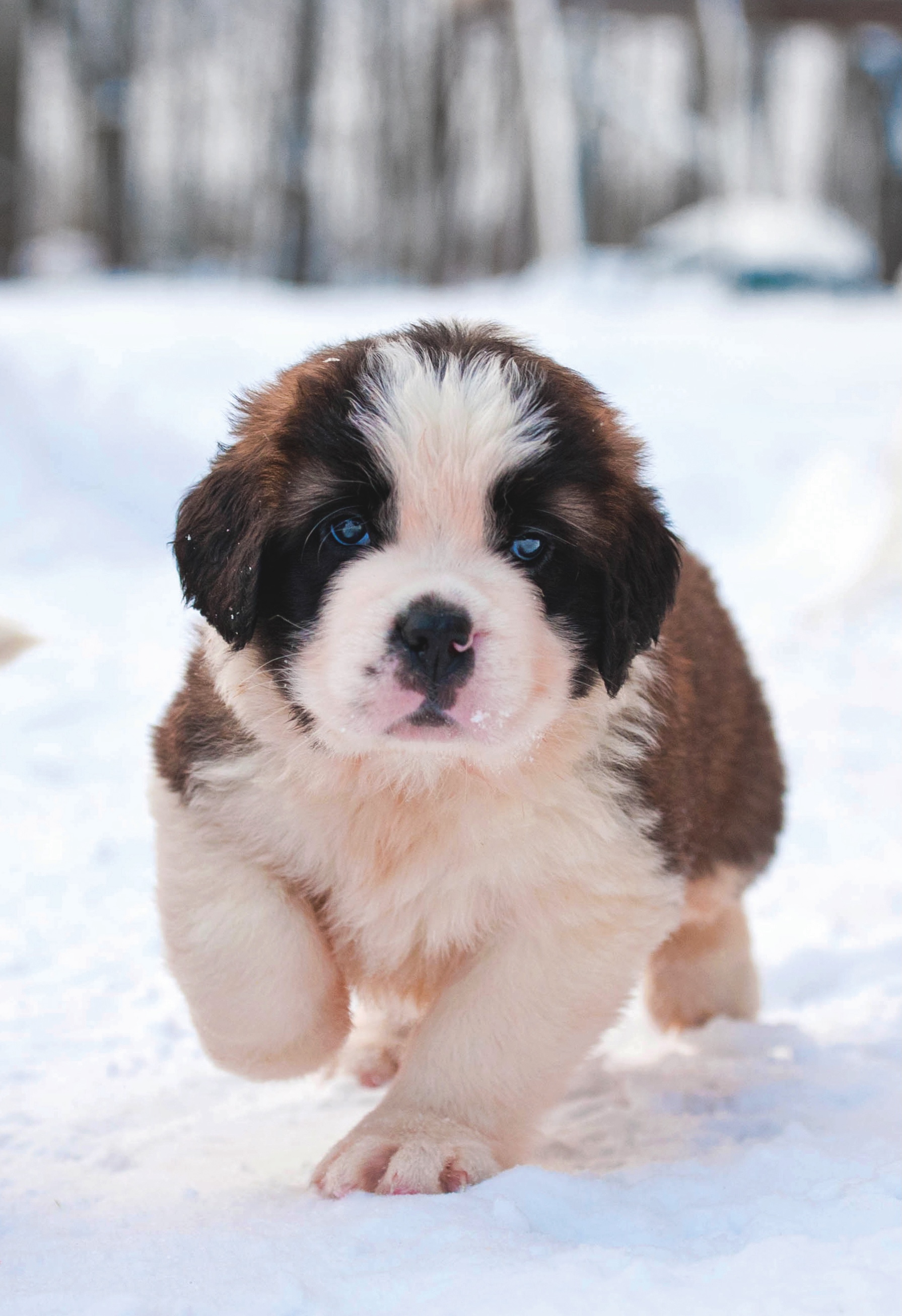
Majestic, kind-hearted, and endlessly loyal, the St Bernard is a dog that commands respect and affection in equal measure. They are not for the faint-hearted (or the faint-budgeted) but for those who can offer space, love, and care, there’s no companion more gentle or more noble.
Fact file
- KC Group: Working
- Size: Giant
- Weight: Up to 90kg
- Height: 75cm (dogs), 70cm (bitches
- Average lifespan: 8-10 years
- Good with children? Excellent
- Good guard dog? Yes, protective but gentle
- Moulting level: High
- Grooming: Moderate to heavy
- Exercise requirement: Moderate
- Jogging partner: Short, steady walks only
- Temperament: Gentle, patient, loyal