


How do you prevent your dog running into danger? An emergency stop could be the difference between life or death. Animal Behaviourist Toni Shelbourne gives you the basics to start teaching this vital cue.
An emergency stop basically means stop right where you are and don’t move until I come and get you or give you another cue.
Teaching this is useful in many situations, whether he is running free, or on a lead or longline. It could prevent your dog running out on to a road. On lead, it could save you both from a nasty injury if he starts to chase wildlife or pulls after another dog. What if you accidently drop the lead? Many people assume that if they can’t let their dog run free, then vital training like recall or an emergency stop isn’t required. I’d suggest it is even more necessary. Here’s how:
Content continues after advertisements
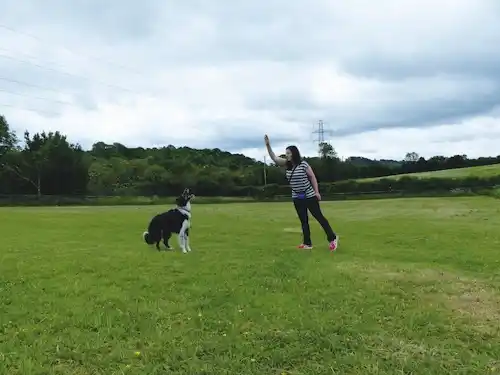
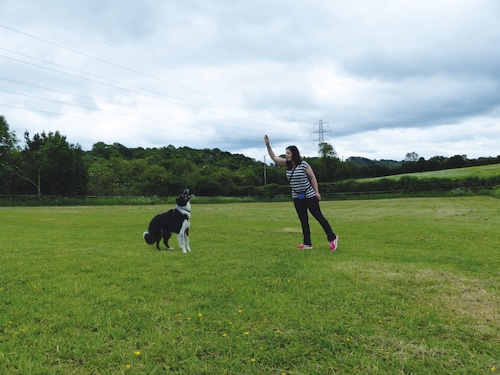
- Start in a safe, quiet place. Have a handful of treats ready in one hand. Throw a treat away from you if you need to encourage some space between you and your dog. Use this time to gather another treat and raise the hand with the treat above your head
- As soon as your dog looks up from eating the treat and starts to move towards you, lean forward towards him, with your arm outstretched above your head and throw the treat. Aim for either just behind or in front of him (you may have to experiment to find which your dog prefers). Keep repeating steps 1 and 2. Make sure you reward your dog at a distance from you. You are looking for stationary behaviour and your dog pausing as he sees you raise your hand
![]()
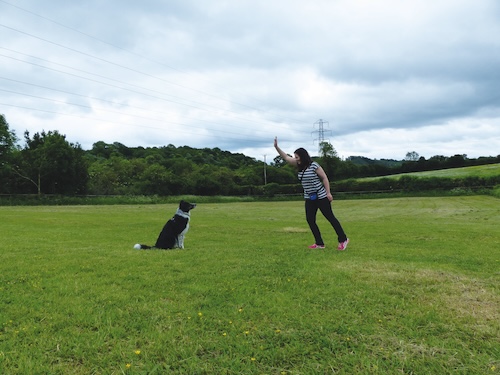
- Over time, your dog will look at you and show stillness. Once he is automatically stopping (in any position he chooses – stand, sit, or down), you can use a cue such as ‘Stop’ or ‘Wait’ as he pauses
![]()
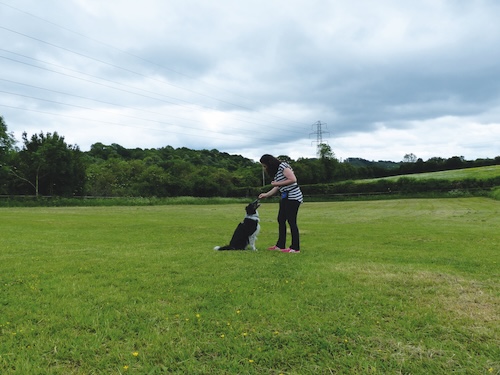
- Once you are getting this stationary behaviour before you throw the treat, the next step is to walk to him and reward him where he stopped. You can jackpot this position by feeding one treat after another for about 5 to 10 treats in rapid succession for staying in position – this will encourage repetition of this stationary behaviour and starts to teach duration
- Once you can see he understands and is stopping reliably when he is moving towards you, teach the ‘Stop’ when moving away
- Start with him walking just a few steps in front of you. Use the same stance – hand in the air and the ‘Stop’ cue. Aim the treat to land just in front of his nose
![]()
- Once he can listen to you when just in front of you and at a slow pace, start to ask for the ‘Stop’ when he is little further away, or moving a little faster
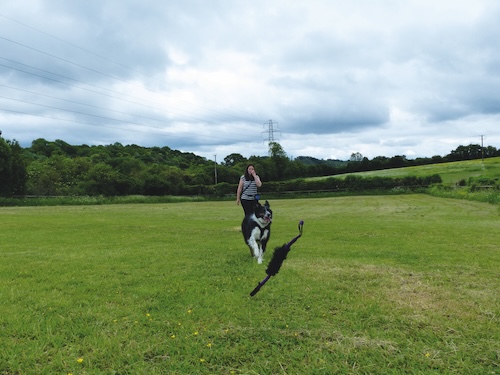
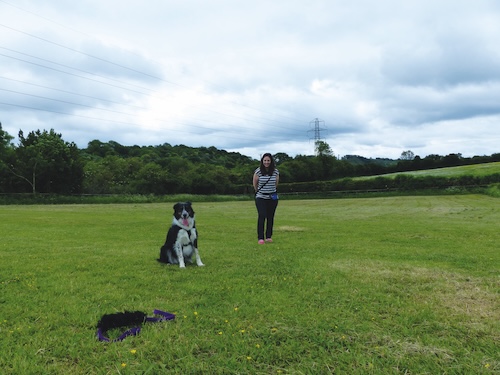
- Add in distractions. Minor ones at first. You can practice on lead if you think he may be to aroused by a distraction. Build up to fast moving triggers such as other dogs, deer, and squirrels.
This isn’t going to happen over-night but with time and patience you’ll be able to teach your dog to stop whatever attracts his attention.