


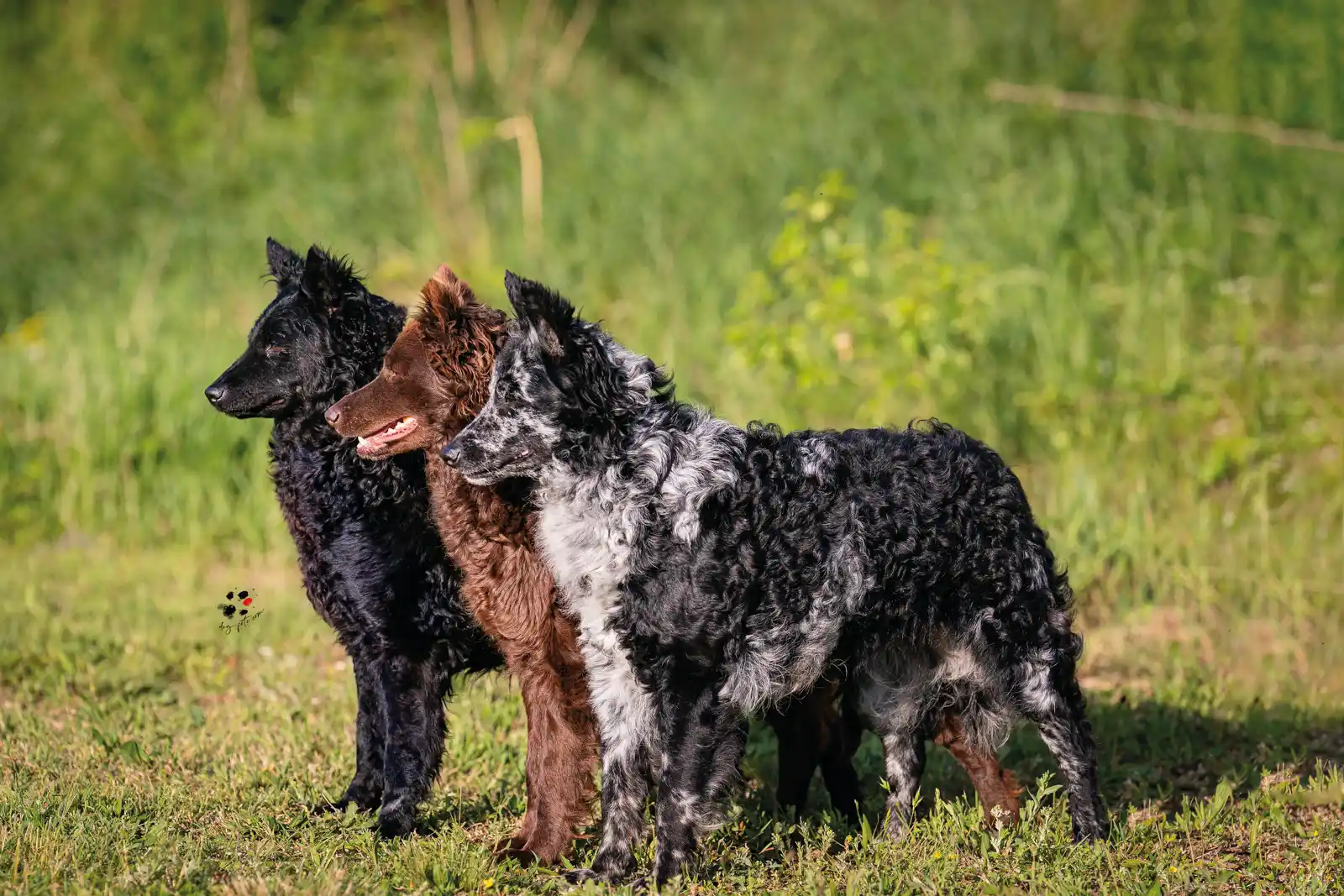
It doesn’t take much for Mudis to turn heads, whether they’re herding sheep in their native Hungary, out for a walk in UK parks, or streets or competing in agility, flyball or obedience. So, let’s find out a bit more about Britain’s 225th pedigree dog breed and its many qualities…
Intelligent, loyal, active, and versatile, the Hungarian Mudi is the newest breed to be recognised by The Kennel Club. Joanne Bednall gets the lowdown on these rare and distinctive dogs...
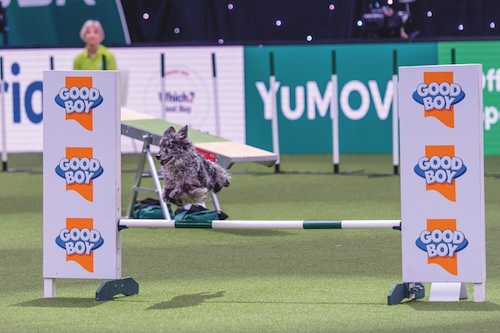
Rosie Cavill & Boo
Q. What’s the breed’s history?
A The Mudi has ancient origins and a rich history that dates back several centuries. Although there’s evidence of Hungarian sheepdogs from as early as the ninth century, references to Mudi-type shepherd dogs first appear in the eighteenth century. Organised breeding of Mudis, who evolved from spitz-like dogs, started around this time, along with the development of the Pumi and Puli, whose ancestors were terrier types.
But it’s thanks to Dr Dezső Fényes, a museum director in the northern Hungarian town of Balassagyarmat, who, in the 1930s, discovered and started to breed an unnamed small, curly-coated driving dog with erect ears, high intelligence, and docile temperament. Formally identified in 1936, the Mudi was almost lost forever during the Second World War when many dogs were killed.
Following the war, breeding continued with the few remaining pedigree Mudis, and a modern breed standard was created. In 1963, the Mudi was accepted by the FCI, the largest international federation of national kennel clubs and purebred dog registries.
Q. What are Mudis used for?
A Traditionally a herding dog, the multi-tasking Mudi is a specialist at managing and protecting large or difficult herds of livestock, alerting bigger guardian dogs to any impending danger, flushing out game – such as wild boar – for hunters, and controlling vermin on farms.
Today, as the breed starts to excel competitively, it is becoming increasingly popular in America and across Europe, particularly Scandinavia, for agility, flyball, obedience, search and rescue, and the show ring. They are also used as therapy and assistance dogs in Hungary.
Q. What’s their temperament like?
A. According to Dorit Powell, who’s secretary of the Hungarian Mudi Club in the UK, Mudis enjoy being with people and are good companions. “They want to please and love being mentally stimulated,” she explained, adding that the breed is valued for its loyalty, drive, courage, adaptability, energy and cheerfulness.
Q. Are Mudis easy to train?
A Alert, bold, tenacious, intelligent, and lively, the Mudi is quick to learn, keen to work, and responds best to positive training methods. They thrive on building partnerships based on trust with their human companions. “Mudis are fast, driven, and trainable with a good attention span,” explained Dorit. “They work more independently than Border Collies and do have an off switch!”
Q. How many Mudis are there in the UK?
A “We know there are at least 80 Mudis in the UK, but it could be as many as 100,” said Dorit, who added that the breed can easily be confused with the Croatian Sheepdog, which is more rectangular in shape.
Q. Does the Mudi need much exercise?
A This active, energetic breed benefits from lots of physical and mental exercise, such as long walks of at least an hour, playing games, and taking part in activities such as obedience, agility, flyball, rally, tracking, and herding. “They also love trick training and searching for food or toys,” said Dorit.
Q. Who is best suited to owning a Mudi?
A Mudis are suitable for most types of living, as long as they are provided with a job or similar mental and physical stimulation. The ideal home is with an owner who has plenty of time, is used to a high energy breed, and can accept the Mudi’s breed-characteristic vocal and herding behaviour.
Q. Does the Mudi’s distinctive curly or wavy coat require a lot of care?
A Low to average shedders, Mudis have a low maintenance medium-length coat ranging from tight curls, like a fresh perm, to loose curls or wavy. The breed doesn’t need clipping or regular bathing or grooming – just a weekly brush – although it’s advised to regularly check their coat for grass seeds, twigs, and knots, especially around the face, ears, tail, and feathering on the back legs.
Q. Do Mudis suffer from any health issues, and what’s their lifespan?
A Mudis are robust and relatively healthy, with a life expectancy of 12-15 years, although it’s not unheard of them to live to 17 and be healthy well into old age. However, there is a concern that epilepsy is starting to creep into the breed.
Q. Any downsides to owning a Mudi?
A As the Mudi’s original purpose was to alert larger guardian breeds, like the Komondor and Kuvasz, to threats to the herd, they are prone to barking (although this can make them excellent watch dogs.) Mudis can also be apprehensive and wary of strangers.
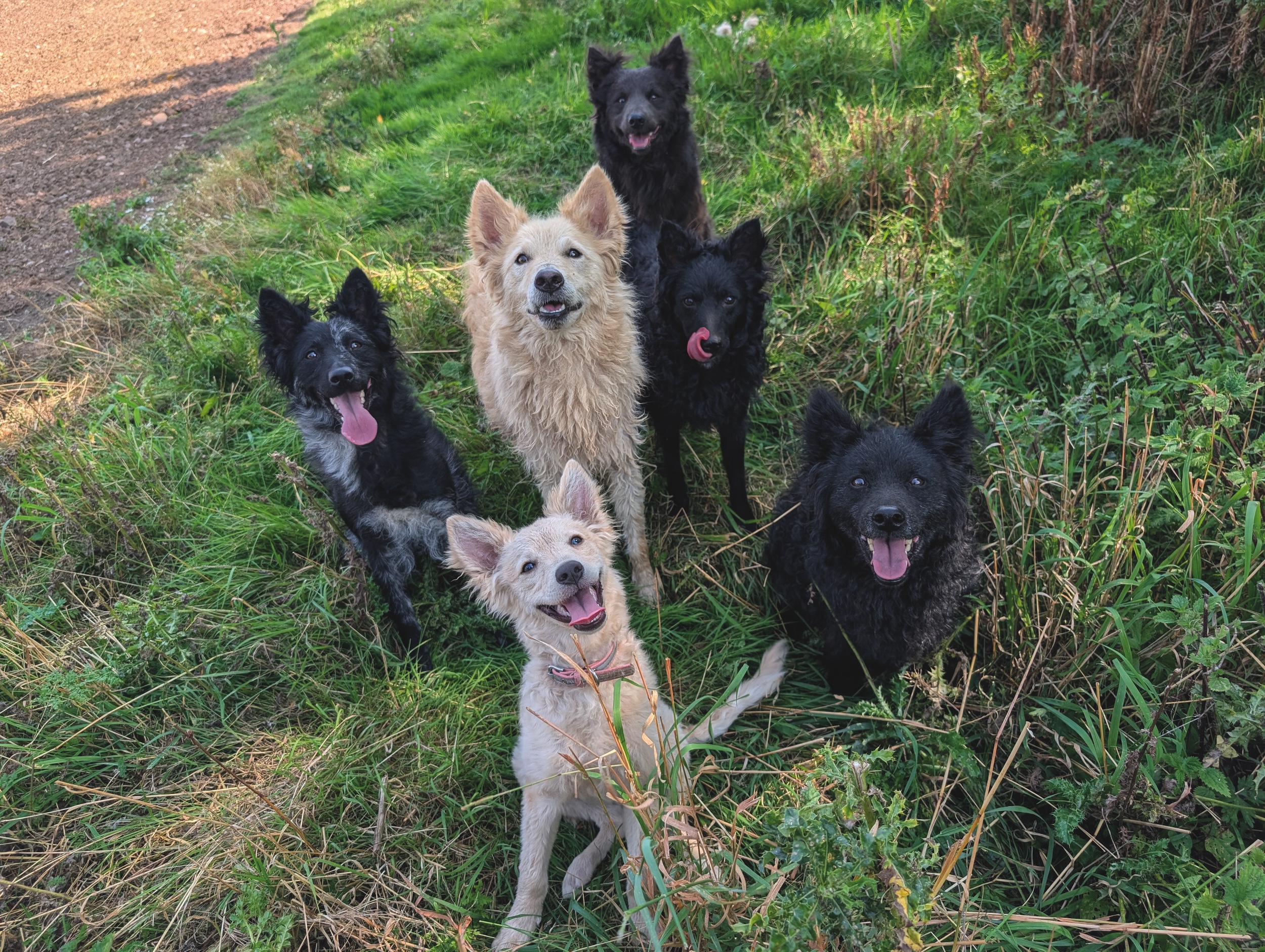
Credit: Chloe Bibby
Mudi breed standard
The Mudi will be categorised in the Pastoral Group on The Kennel Club’s Imported Breed Register until a UK breed standard has been produced and approved. Until then, the FCI standard refers to this medium-sized herding dog as having:
• An alert, wedge-shaped head, with a slightly domed skull and forehead that tapers evenly towards a narrow nose
• Almond-shaped dark eyes (although blue in merle dogs is not considered a fault)
• High set prick ears
• Medium length, slightly high set, well-muscled neck
• Pronounced, long and muscular withers
• Straight, medium length back with a sloping topline towards a short, muscular croup
• Short, firmly coupled loins
• Moderately sloping and well-muscled shoulder
• Slightly curved forechest that reaches the elbows
• Broad, flat ribs
• Long, well-muscled upper thighs
• Slightly tucked-up underline and belly
• Tails can be full (carried in a sickle shape above the topline during active movement) or a natural bobtail
• A slightly curly to very wavy dense, shiny 3-7cm long coat on the body
• Short, straight and smooth hair on the head and legs
• Movement consists of mincing steps, with a vigorous trot and powerful gallop
• Colours: black, white, fawn (from beige to red), ash, liver, ash-brown and merle. Small white markings are accepted but not desirable
• Height at withers: dogs – 41-47cm (16-19in); bitches – 38-44cm (15-17in)