


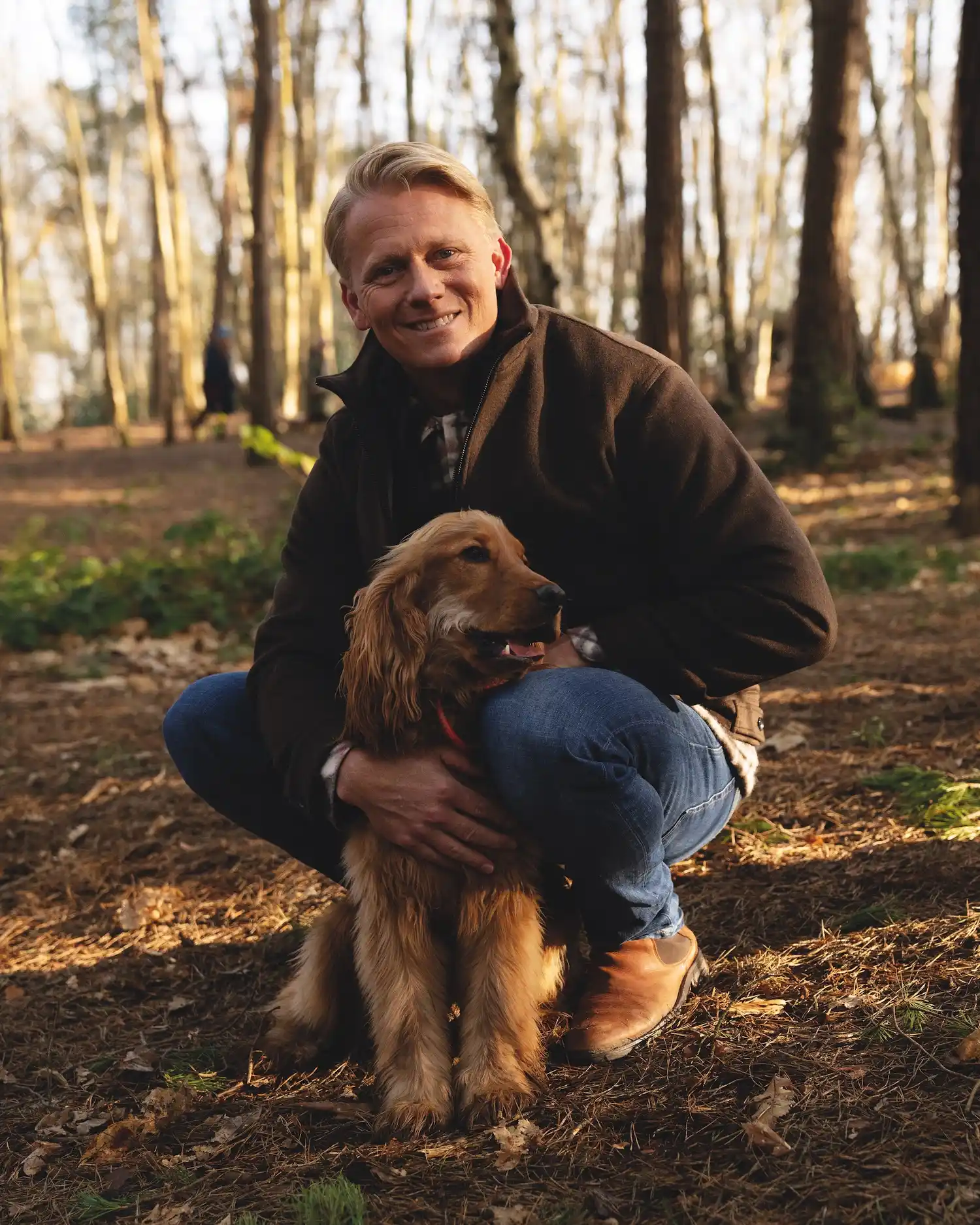
Dr Scott Miller is an Australian veterinary turned TV personality, and the resident vet of ITVs ‘This Morning.’ He sat down with Michael Hallam to talk all things relating to his many career paths, life in front of a camera, and work with Tavo to make pet travel safer…
MH: Tell us about where your love of animals all began.
Dr S: So I always loved animals. Ever since I was a very small child, I always remember being fascinated by all creatures. I was the kid that would pick up insects, animals, and rescue everything whether they needed to be rescued or not! I was always hugging the neighbourhood dogs and cats and was fascinated by wildlife.
Australian wildlife is very inspirational. I think I knew I wanted to be a vet when I was camping with my parents in the outback when I was about seven. I just opened the tent door, it was 360 degrees of nothing before I saw a little rabbit on the horizon and thought, ‘oh, I wonder how close I can get?’ It was the only thing that you could see early in the morning.
I basically got right up to it and touched its nose. It was like this eureka moment as I thought that was amazing. There was no one to tell about it, but I still remember this sort of rush of almost like a calling really. After that, I knew I wanted to be a vet.
MH: How did your journey take you from Australia to becoming a vet here in the UK?
Dr S: So, my parents are 10-pound Poms actually and came over in ‘67 so myself and my older brother had English passports. Although we were born in Australia, we were able to have British passports. I did all my schooling and my university years in Australia and then after working at the RSPCA in Sydney for a year, I just thought, ‘you know what, I actually wouldn’t mind traveling.’ I went to see a bit of Europe and just never left.
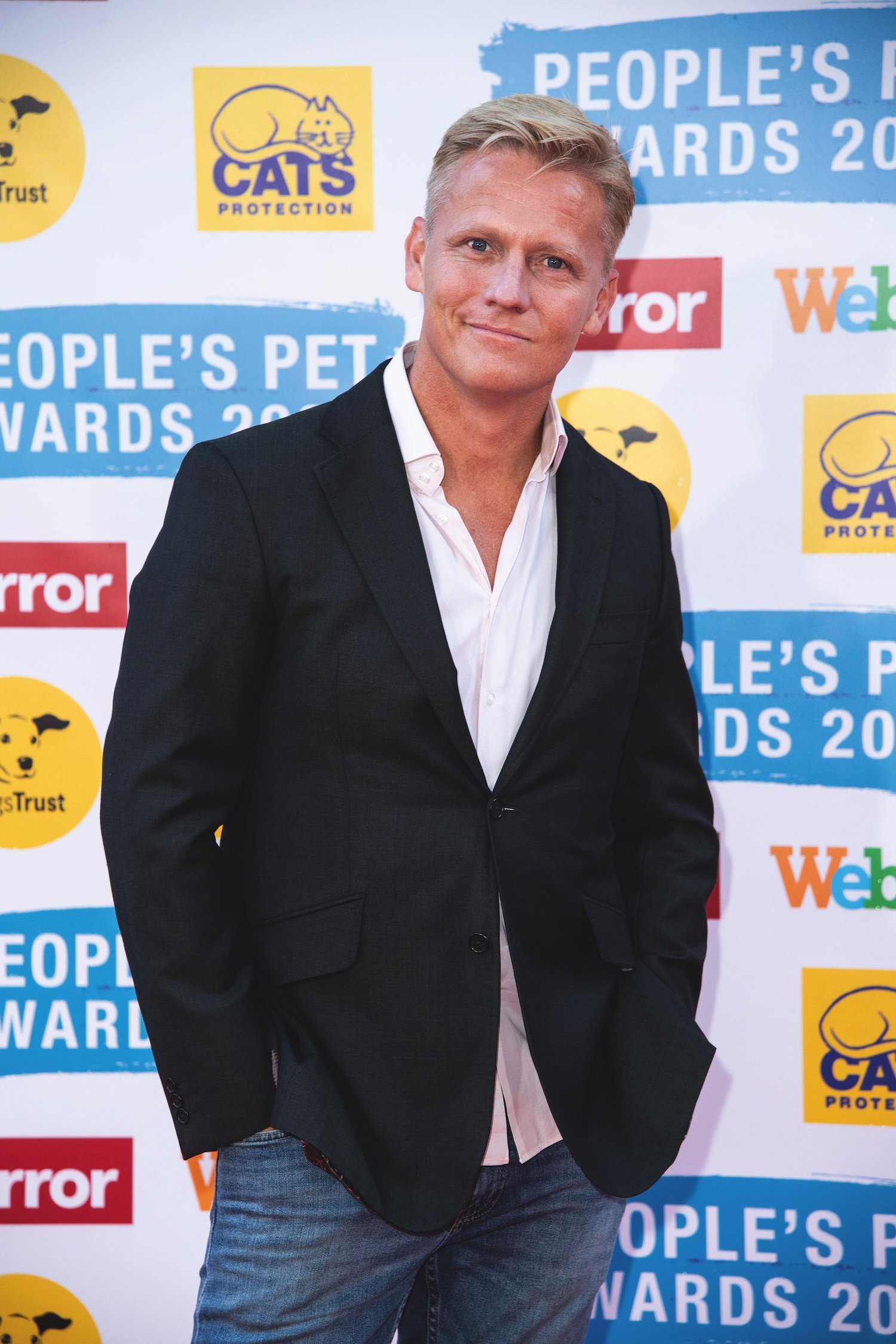
Credit: Dr Scott Miller
MH: What kind of issues do you see most commonly with dog owners and how well do you think we look after our dogs as a nation?
Dr S: The common conditions are things that are preventable generally. I think there is actually a bit of a lack in basic understanding of your dog's physiology, and just what's normal about them. Once you've worked out what's normal, then it's very easy to work out what isn't.
A physical examination of your dog once a day is just so important and it only takes a few minutes. You can see off everything from ear infections to grass seeds, some illnesses and even parasites. There's just a huge list of things that you can prevent from being an issue. And the more you do that, the more your dog is accessible to the vet to be able to examine because they are used to it.
I think generally a good job is done, and certainly in the UK there's a sense that dogs are part of the family and so they deserve the same level of care as a human. That's been able to allow us as vets to sort of flex our muscles a little bit more and are provide a better quality service.
I think it’s just about continuing to have a level of education. If you've got a dog, you should do have a basic level of understanding. When you go into a vet and you're charged for asking a question that actually you could have addressed yourself, that’s where I think there can be a bit of an impact on that relationship.
I would just love if people had some more education. But generally, I think we do a very good job here in the UK.
MH: What is the best thing and worst thing about being a vet?
Dr S: The best thing about being a vet is just the ability to interact with animals on a really personal level. I've just come back from Kenya, filming a documentary about the donkey skin trades, but also got to work with some conservationists. One of the amazing things I did was when I got to be involved with the Mara vet team who were able to dart two bull elephants, so I could clean out spear wounds.
Touching a wild animal like that and improving its chances of survival was epic. I've done lots of those sorts of procedures with all sorts of animals across my career such as bears, koalas, and tigers which is a very privileged position to be in.
The worst thing, of course, is euthanasia of animals. It's not something that we shy away from and what I pass on to younger members of staff or support staff is that, in the end, it's not about you. It's about the owner and it's about the animal.
You kind of need to jump out of your own skin, put yourself into theirs, understand the decision making ,and appreciate the welfare of the animal. In order to have any longevity in this career, you do need to be able to separate yourself to be able to protect yourself because it can be very difficult.
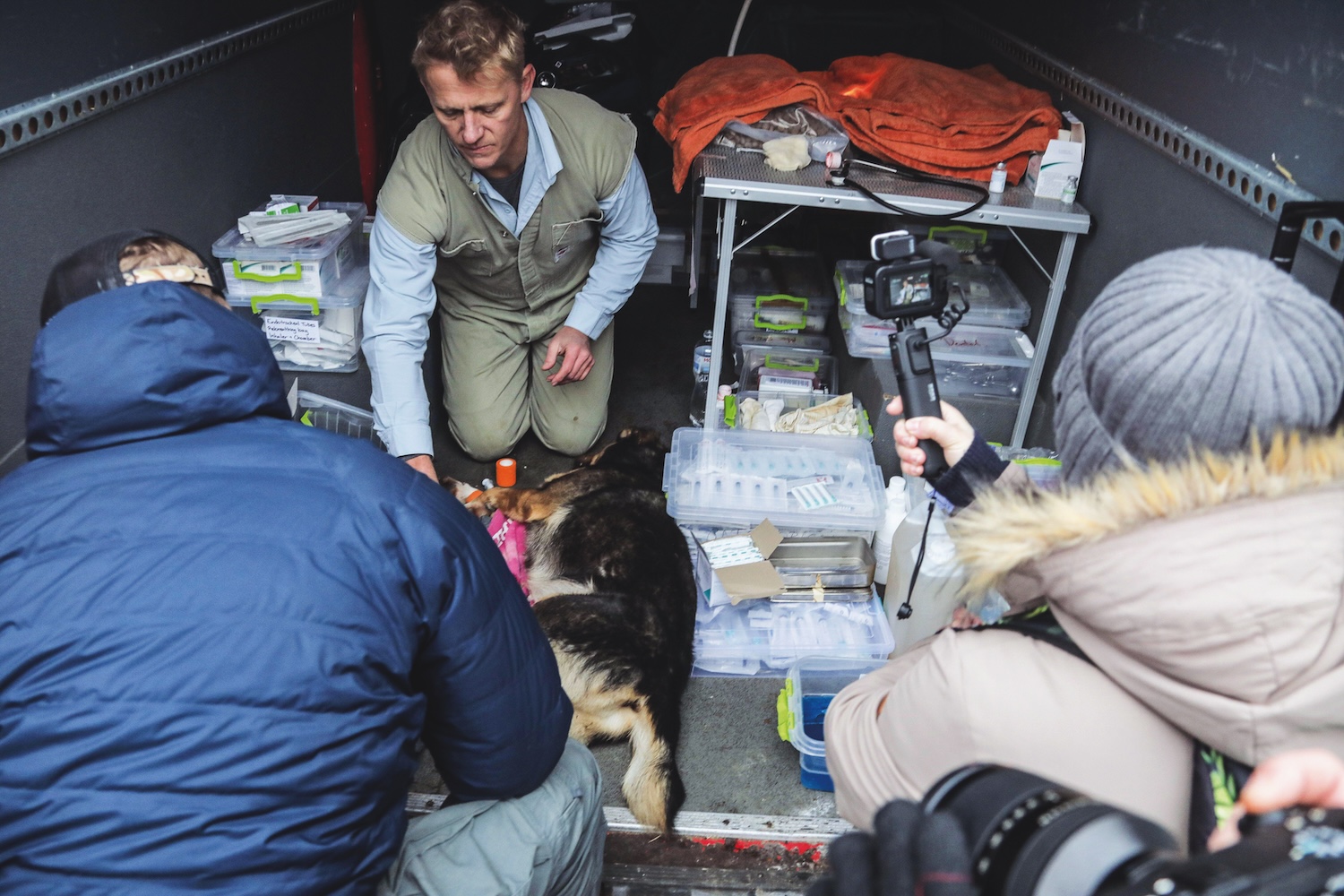
Credit: Dr Scott Miller
MH: You've been on screen for a long time, and you’ve got a really great following online. Where did all the TV stuff start?
Dr S: It was a bit of a fluke. I was doing a little bit of stuff in Australia. I was doing TV ads and things like that. And then at the RSPCA, my first job, was actually the home of the Australian version of animal hospital.
So I did a little bit there and I was like ‘oh I like this because it was a way to get your point and your passions across, but to a wider audience than just one person in the consult room.’ I appreciated immediately the power that media has in changing people's minds, hopefully in a positive way. It was also just the energy and the thrill of doing it. It was just fun, you know?
Anyway, I came to London and where I got my first job in East London I got sort of covert phone call about some sick chickens. It turned out they were the chickens in the first series of Big Brother. So actually, I'm the only ever non-con contestant to feature on the show. So, that was pretty incredible. It was Marjorie, the chicken. It was just before and after Nasty Nick got outed, so everyone was watching it.
After doing that, I then got introduced to This Morning, and it sort of went from there.
MH: What have been some television highlights for you?
Dr S: Certainly working with Paula O’Grady for the first three series of his tea time show was pretty amazing. I learned a lot from him and the way that he approached life. You know not taking things too seriously and also appreciating that when you watch television you want to be entertained.
He taught me how to be able to educate by stealth. So if you can make something watchable and interesting then you can get across the important messages and a little bit of education by not shoving it in people's faces. I think that really changed my approach towards TV completely.
During my career, I’ve done some very cool things. For This Morning I've travelled with the Animals of series. So I was in Costa Rica, and then the Arctic, and then most recently Sri Lanka. All of which were incredible.
More recently, I’ve appreciated that after 25 years, you're probably in that legacy phase. I have started to think about what are the first things that I'm really passionate about? So one of the main ones was setting up Rescue Vet on YouTube which allows me to really lean into that area of work, which I've always been passionate about.
MH: On your YouTube channel, you've had some quite personal questions and things that you've shared online, how has that been?
Dr S: Well, I suppose when you're putting yourself out there in the media, I think the illusion of perfection is nonsense. I think it's really important that we are authentic. I also suppose because I am autistic, I actually don't really have the facility to have many layers.
I'm very honest because I feel uncomfortable being any other way. And as I've got older and then I've realised that I'm a parent of two autistic children, I think it's really important to represent a community that can generally feel a little abnormal in their own heads and therefore a little bit off to one side.
But neurodivergence is also a really important element to bring to the fore and to realise that actually, you might feel that things are difficult now, but actually you can achieve things despite of it. I just felt in the end, that as a parent, it was really important to lead from the front with my kids.
It's been a journey of understanding why things when I was younger were really difficult. But also, I think the key thing I've learned is that it's not an excuse, it's a reason. There are things that I could improve on, as we all can in life, and you should continue to try to do so. So, it's not an excuse to be a certain way. It's a reason why you might get things wrong. I think it's just kind to say to people I've not got everything right.
A lot of vets these days when they're teaching younger vets, they go through their mistakes, like the worst case they've ever dealt with. They look at all the mistakes they’ve made because it just makes people realise it's not this perfect world where people are on pedestals and that's why they've achieved what they’re achieved. When people ask me a question, I’m going to give them an honest answer.
MH: Tell us about the dogs that you own and are part of your family.
Dr. S: Mango is my rescue dog. He is a delight and has a sort of ginger tone with a mop of blonde hair, like his dad. He was a rescue dog. I took him on last year from the Dog's Trust in Hampstead and he's just been a dream so I'm just very grateful to have him.
He's a little obsessed with me, he is like my shadow. But he's absolutely delightful, athletic, happy, sociable, and just all the things that you kind of want a dog to be really. I'm really lucky and so happy he's come out of his shell.
He wasn't hugely socialised when I got him, so it's taken a lot to sort that out. I've got an amazing team here at the vet practice who look after him when I'm away. They've always got dogs because they do dog sitting. So now he’s just hugely sociable in a really wonderful way and generally loves most people.
We've also got Scully and Betty, who I share with my partner. Scully I actually delivered by caesarean about 10 years ago now. She is a sort of mixture of little white, fluffy dogs such as a Miniature Poodle, but she's just gorgeous. And then Betty is a Bernadoodle. She looks like something from Fraggle Rock. She’s just hilarious, brilliant, and a delight.
MH: You’re a very passionate ambassador for Tavo and its campaign about pets travelling in cars. Tell us about the campaign.
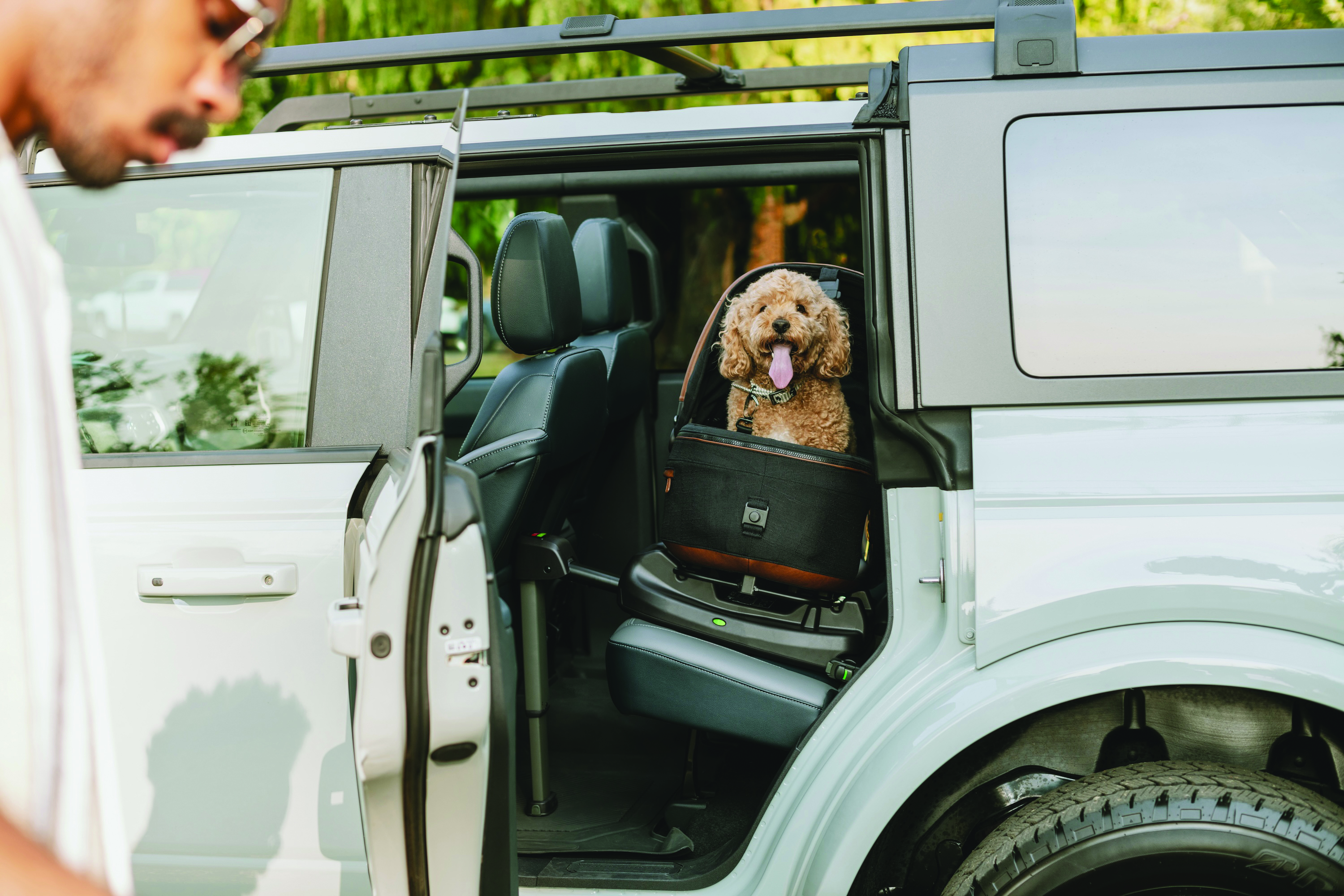
Credit: Tavo
Dr S: It’s really just the awareness of travelling safer with animals. I think that since the eighties, there's been seat belts for kids and now it's like you would never get into a car without a seatbelt. There was so much in Tavo’s ‘Imagine the Impact’ campaign that came out. It’s horrifying to hear how many people aren't doing the right thing by their animals.
It was 59% of motorists in the UK travel with their dogs unrestrained which is horrifying and obviously, as a vet, we see the ramifications of that. You see broken jaws, teeth lodged into dashboards, fractured limbs. Really significant injuries and death, of course.
There was a finding that said that if you're driving at 30 miles an hour and you stop suddenly, an unrestrained dog can be sent forward at 30 to 60 times its own body weight. So, you've got a projectile flying through your car which will impact anyone in the front. It will obviously impact the dog. When you think of it like that you realise it must be restrained, whether it's a dog or not. It’s not something that you should be having loose.
Some of these findings, especially with the younger generation, are very surprising. For example, 43% of motorists let the dogs sit on their lap in the car. That really shook me. It rises to 76% in the 18-to-24-year age group.
About Dr Scott Miller
Popular tv vet Dr Scott Miller has lit up our screens on a variety of shows from Vet on the Hill to This Morning. As well as seeing Dr Scott on TV you can stay up to date with all his veterinary adventures by subscribing to his YouTube channel (youtube.com/@rescuevet) or following on Instagram (@drscottym).
Find out more about Tavo
Thanks to Tavo for organising this interview. To find out more about Tavo’s pet travel protection systems, visit tavopets.com/uk