



Many dogs are uncomfortable being left alone and some become so distressed that they cause damage to themselves or the property they live in. What can you do if your dog struggles with being isolated.
Like us, dogs are social creatures that thrive in company so being home alone can be very disturbing for them. There are many reasons why he might not cope. Some just have frustration of missing out on a fun outing, but many have what we call isolation distress. Others are so attached to their guardian they can panic if that person disappears. Sometimes a dog has suffered a trauma while you are out, a loud noise that frighten him for example. Dogs with painful conditions similarly often struggle to be alone.
How do you know if your dog is uncomfortable when solitary? Well, he will probably start to show restless behaviour when you prepare to leave the house. You may also find he follows you everywhere even when you stay home. Many dogs if given a tasty treat or enrichment food toy won’t eat until you return. He’ll show worried body language, and you might notice a rise in his breath rate when you pick up your keys or put on your shoes.
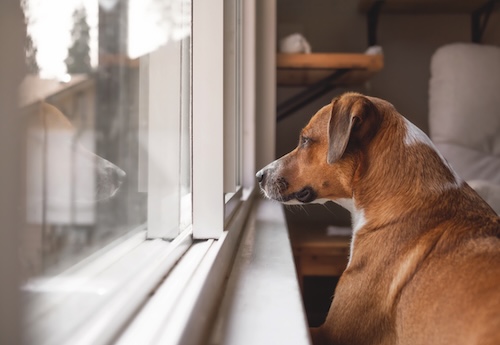
Of course, unless your dog howls, destroys the furniture, or toilets when you are gone, you won’t know what distress signs he shows when you are out. A camera to monitor his behaviour is not only useful to ascertain what he does when left, its essential for when you work on helping him cope.
Helping him tolerate being solitary can be complex and takes time. It really is best to work with a behaviourist who specialises in separation cases. These specialists will work through a programme with you and give expert advice on all the tip and tricks to training a more confident response to being alone.
While you are searching for the right specialist here are some simple things you can do to alleviate his concerns:
Never leave him alone for longer than he can cope with. Ask friends or family to help or employ dog sitters.
Make a list of your leaving cues from shutting windows to putting on shoes. Work through these but don’t go out.
If he follows you everywhere, numerous time a day, get up, walk to the door of the room you are sitting in, but don’t leave the room just sit back down again. Do this often enough that he starts to ignore your movement and stops following you. You can do the same with the door you exit the house from, too.
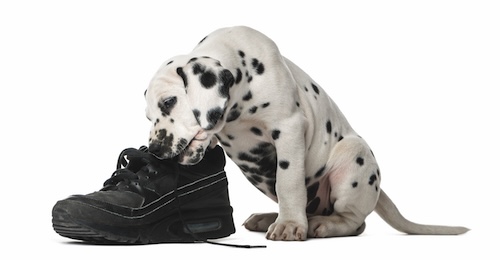
If you need to close a door, say to the bathroom, and your dog worries about even this brief separation, place a handful of treats just outside while you spend a penny. If he is calm enough, he will eat them.
Set up a see-through barrier and sit just the other side of it and read a book while watching your dog to see if he can cope with even this slight separation from you.
I would say, probably around 80% of the hard work when helping dogs be comfortable alone, is done with you still in the house. The key to cracking this issue is to get professional help.