


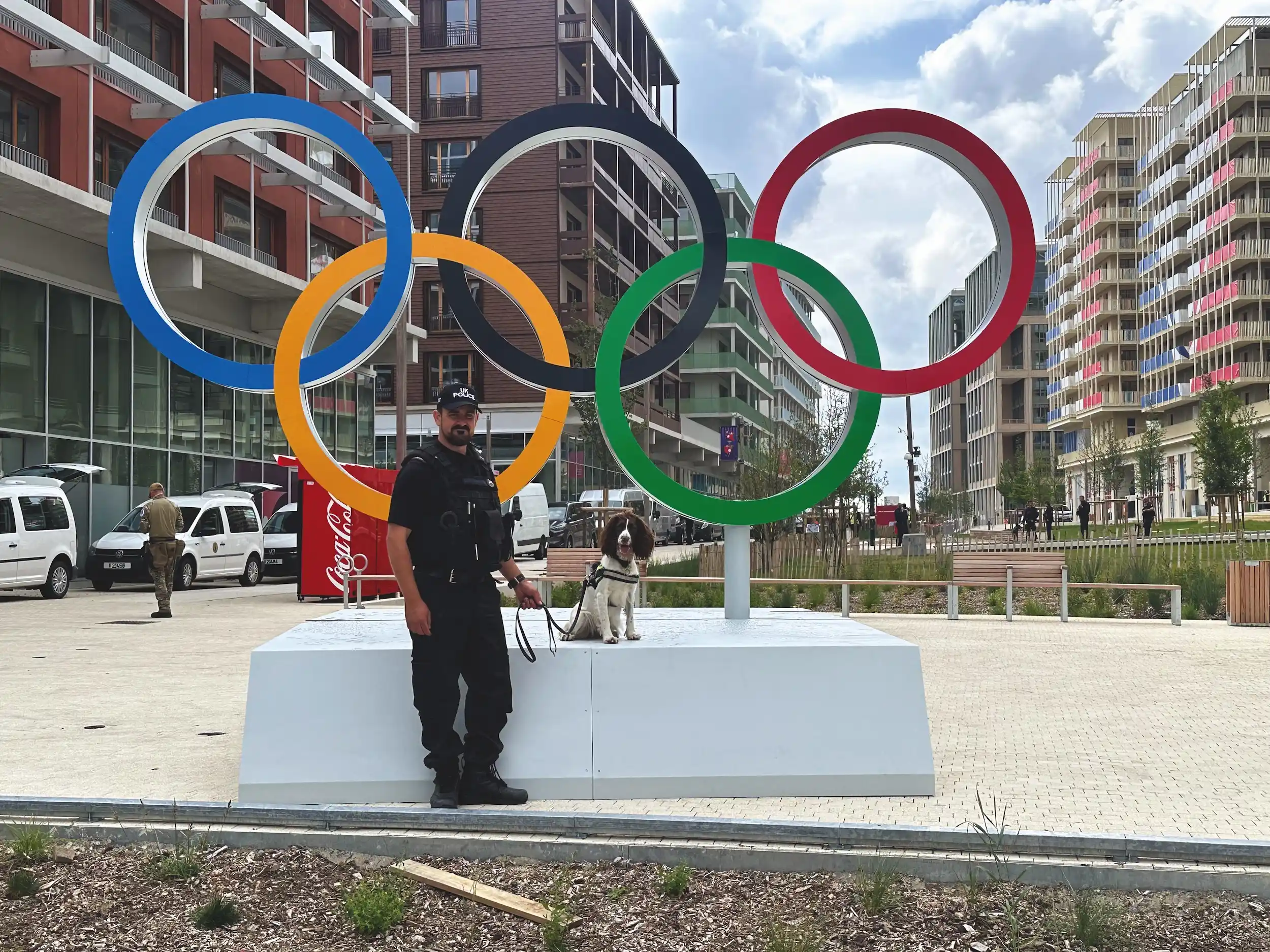
Just months after qualifying as an explosive's detection dog, PD Hope and her handler Sergeant Ben Smith were deployed to help ensure everyone’s safety at the Olympics.
For one small spaniel from Avon and Somerset Police, working as part of a huge international security operation in Paris alongside 150 dog teams, was just another day at the office.
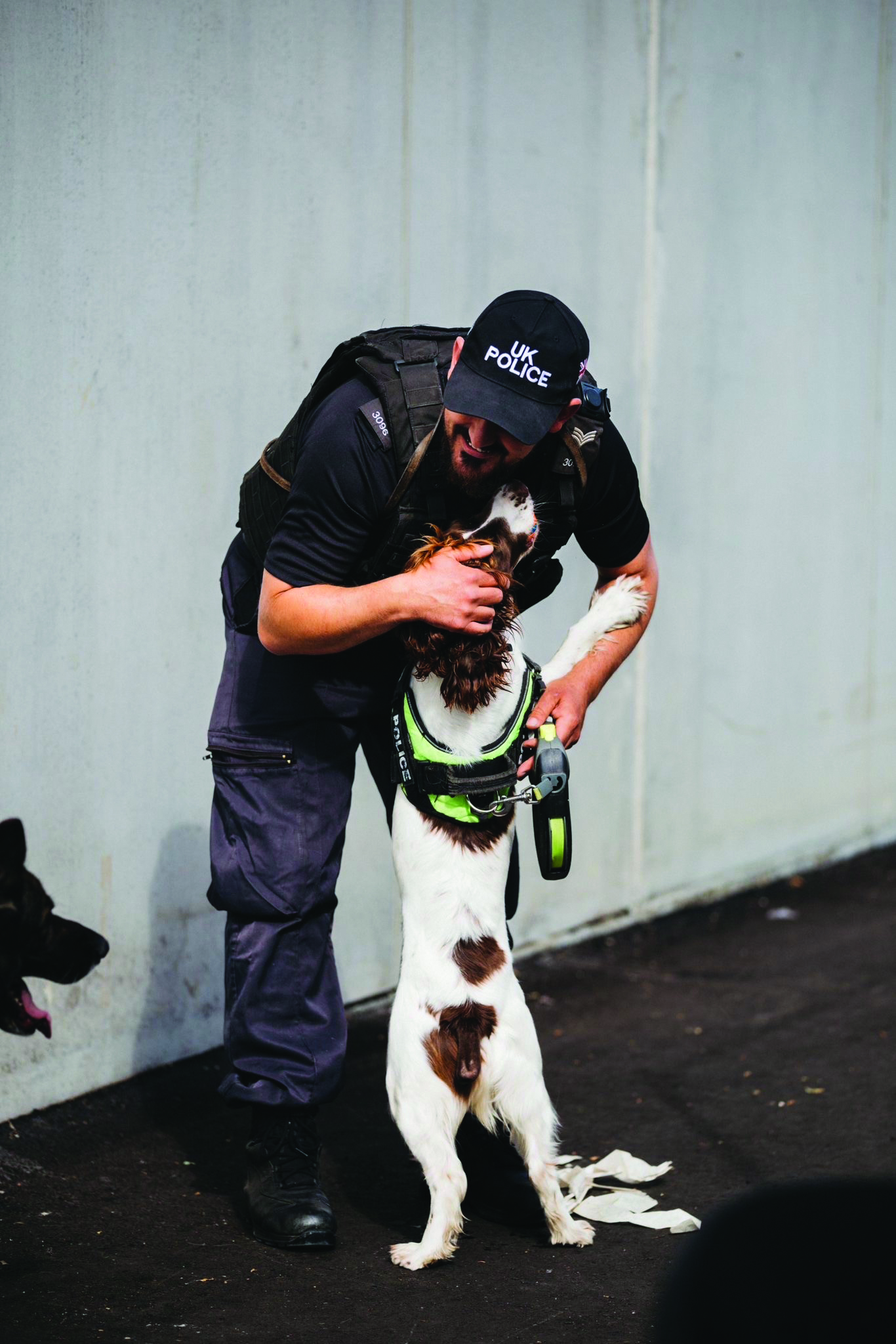
PD Hope and her handler, Sergeant Ben Smith, were selected to travel to the French capital to help the Police Nationale provide security in the Olympic Village for nine days ahead of the 2024 Games.
Initially, Sgt Smith wasn’t sure how his young English Springer Spaniel x Cocker Spaniel would cope with the pressures and demands of the job, as she only graduated as a fully-fledged explosives detection dog last October (2023).
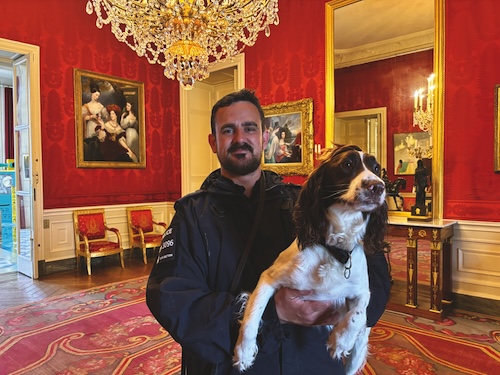
Credit: Sergent Ben Smith
But he needn’t have worried. Hope not only undertook her duties like a seasoned professional, but shone on the world stage, impressing the French police with her diligence and work ethic, and making her handler proud.
The three-year-old spaniel is a product of the force’s own breeding programme and can boast an impressive lineage – her father is a West Midlands Police dog; her mother is a digital detection dog, and her uncle is a drugs detection dog.
“Right from the start, it was clear that Hope had all the right traits to become a talented and successful explosives detection dog,” explained Sgt Smith, who shares nine dogs – a mixture of working, retired and pets - with his partner, who works in the prison service.
“We built on Hope’s excellent genetics with the right training and input from the puppy walking team."
Sgt Smith described his canine partner as very driven, assertive, highly motivated and fearless.
“Hope is not afraid of anything and works through any distraction,” he continued.
“My general purpose dog, Leo, loves her and the pair are inseparable, although she’s the boss. He can bring down an armed suspect but will always back down if Hope has a toy.
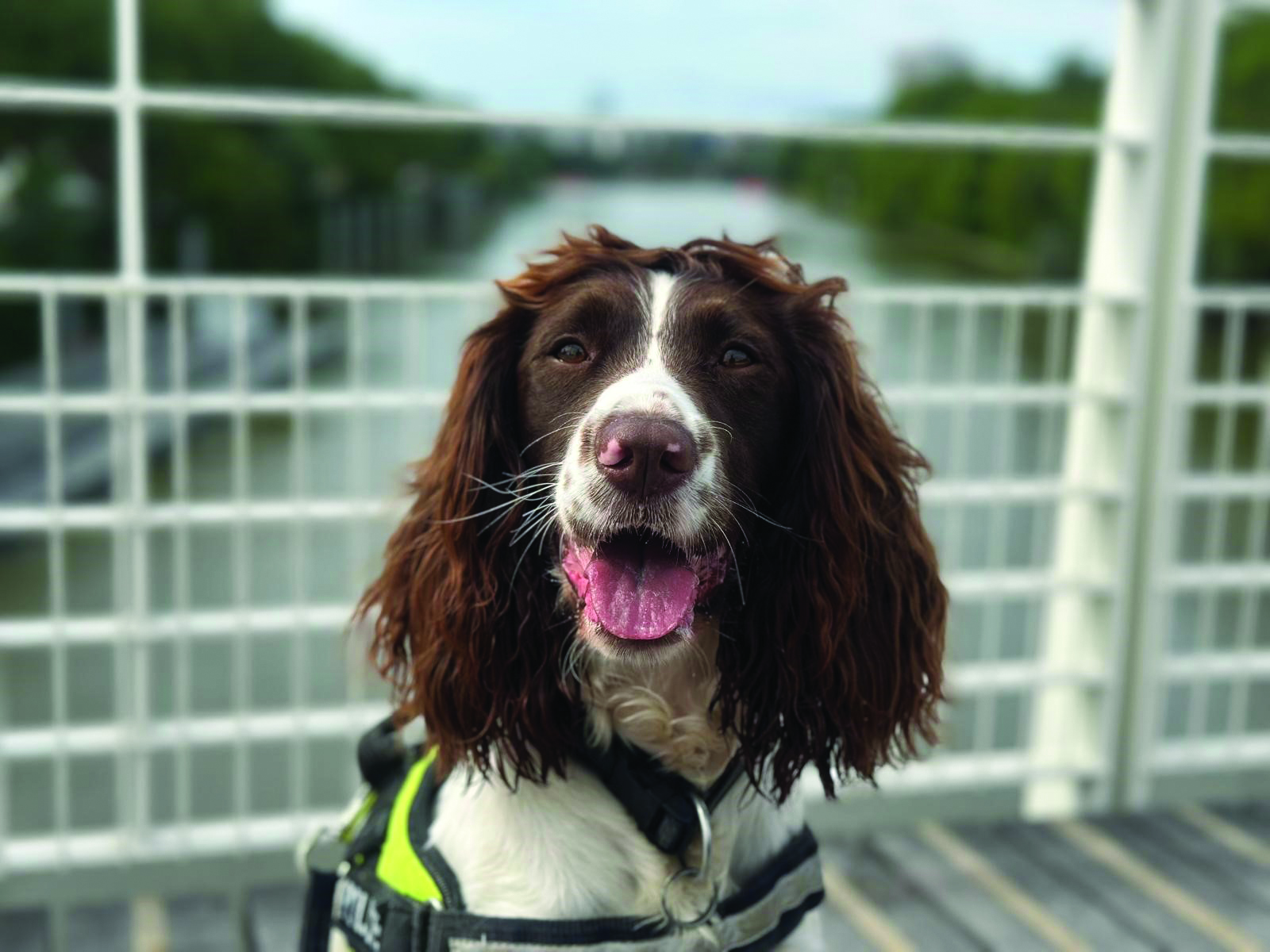
Credit: Sergent Ben Smith
“Although she is small, Hope is strong willed and can be mischievous – she likes to go to sleep in the raised planters outside and helps out in the garden by doing her own digging! But she’s very sociable, friendly, sweet and trusting and loves my two children. Hope and I gelled early on. She has a massive heart and gives love freely and willingly.”
After qualifying, the spaniel’s first test was searching Bath Abbey and the procession route before an event to mark Remembrance Sunday last November.
“For her first job, a lot of searching was involved, but she handled it really well and didn’t let me down,” continued Sgt Smith, who’s 35.
“We then did a night-time search at the same location in preparation for a visit by Queen Camilla. Searching the nooks, crannies, bell tower and medieval staircase of such an historic building in the dark didn’t faze Hope at all. It felt very poignant to play a significant role in a big security operation, which also provided reassurance to other emergency service personnel who followed us in afterwards.”
But Sgt Smith added that while the work has come naturally to Hope, he has had to adapt to a different style of handling, going from a high-octane general-purpose German Shepherd to a busier, more methodical spaniel.
“It has challenged me as a handler and taken me out of my comfort zone,” he explained.
“The two roles are very different. The general-purpose work is more adrenaline-fuelled and fast paced, while explosives detection work is more pressured because the stakes are higher and we are responsible for other people’s safety. I enjoy both for different reasons. When working with Hope, I can never be complacent and lose sight of what we are there to do. The magnitude of the job is never lost on us.”
So Ben was thrilled to be one of four dog handlers selected by Avon and Somerset Police to join officers from other UK forces and security teams across the world at the XXXIII Olympiad.
But after arriving in Paris and seeing the scale of the task ahead of them, Sgt Smith knew they would have their work cut out.
“We had a massive area to cover – the Olympic village spanned 51 hectares accommodating 14,000 athletes – and my first thought was that it would be a huge undertaking.”
However, Sgt Smith was hugely impressed with the French police’s organisation, attention to detail and high animal welfare standards.
“The French were so accommodating and had prepared for hot weather,” he explained.
“Animal welfare came first - dogs were continually rotated and rested and each worked for 20 minutes before being rested for 40 minutes. We were astounded by the level of care and interest shown in our dogs and our training methods.”
At first, Sgt Smith was unsure how Hope would cope with all the traffic, people and other working dogs.
But she excelled in everything asked of her, even overcoming the French police’s initial scepticism of the breed.
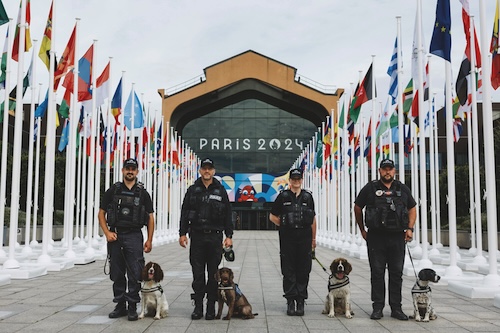
Credit: Sergent Ben Smith
“Spaniels are very efficient and cover a lot of ground in 20 minutes,” explained Sgt Smith, who was over the moon with how his dog handled the high-pressure atmosphere.
“To begin with, we felt like we were a bit of a curiosity to the French as they are used to working with Malinois and German Shepherds. But the speedy and effective way in which our dogs operated soon proved their advantage and by the end, we’d earned the respect of the French police.
“The atmosphere was amazing – the spirit of the Olympic Games was captured in the 150 police and military dog teams from all over the world gathered in one place. We were all humbled by the hospitality of the French and were united in a common bond - our love of working with animals, which transcended any cultural differences and language barriers.”
Sgt Smith added that despite their hosts’ initial surprise and amusement at seeing spaniels, he and his colleagues soon learned how highly UK working dogs are regarded in France.
“They were fascinated by our dogs and training methods while we learned a lot about their different style of searching,” said Sgt Smith, who added that they were able to demonstrate the ease of lifting spaniels to search overhead sites, compared to the heavier shepherd or Malinois breeds.
“Our dogs easily and efficiently searched boxes with equipment in the main buildings in the Olympic Village. Luckily, we found nothing untoward during our stay.”
Credit: Sergent Ben Smith
Although the work was intense and involved long days, Hope and her canine colleagues were able to enjoy extensive downtime, and attracted a lot of fuss and attention from Olympic staff, volunteers and other police officers.
“The dogs picked up on all the excitement and energy levels in the village and bonded as a team themselves. Hope did me proud.”
While Sgt Smith hopes that his special spaniel has many years ahead of her as a successful working dog before retiring with him and his other dogs at home, he is keen that she and the rest of their team are recognised publicly for the lifesaving role they undertake.
“These dogs do a lot of work behind the scenes so it’s nice for them to be in the limelight from time to time,” he added.