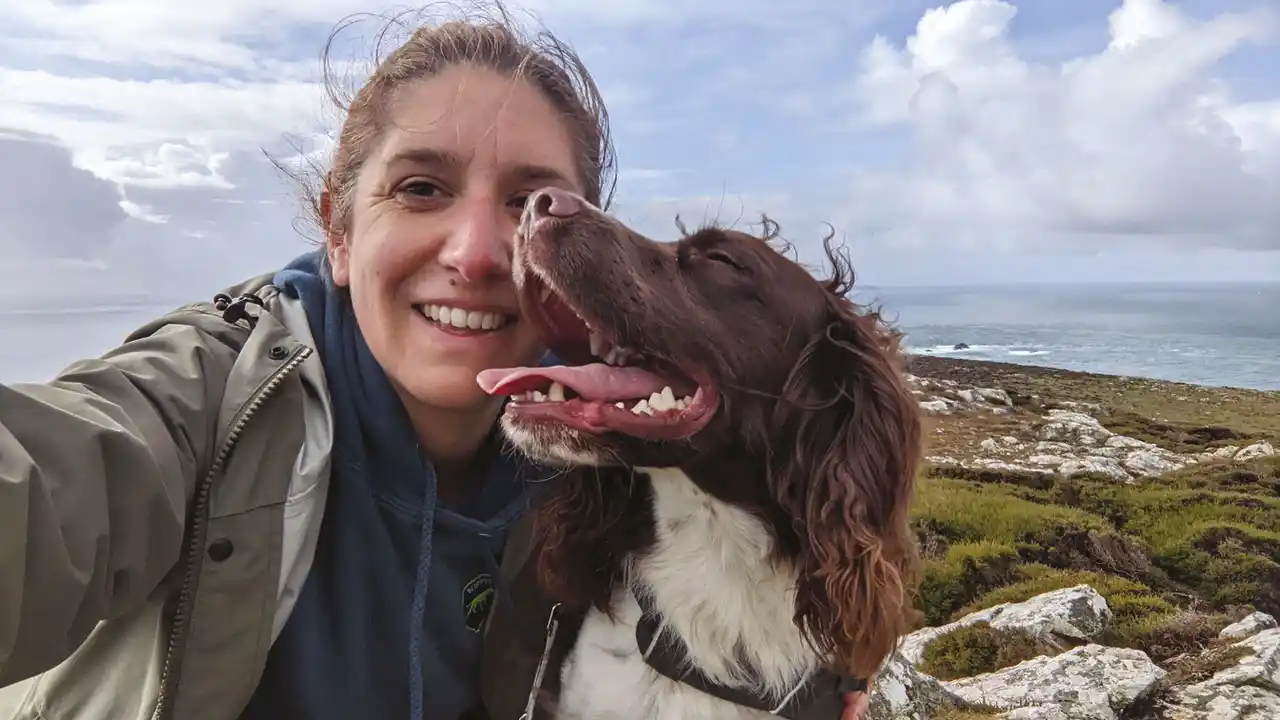
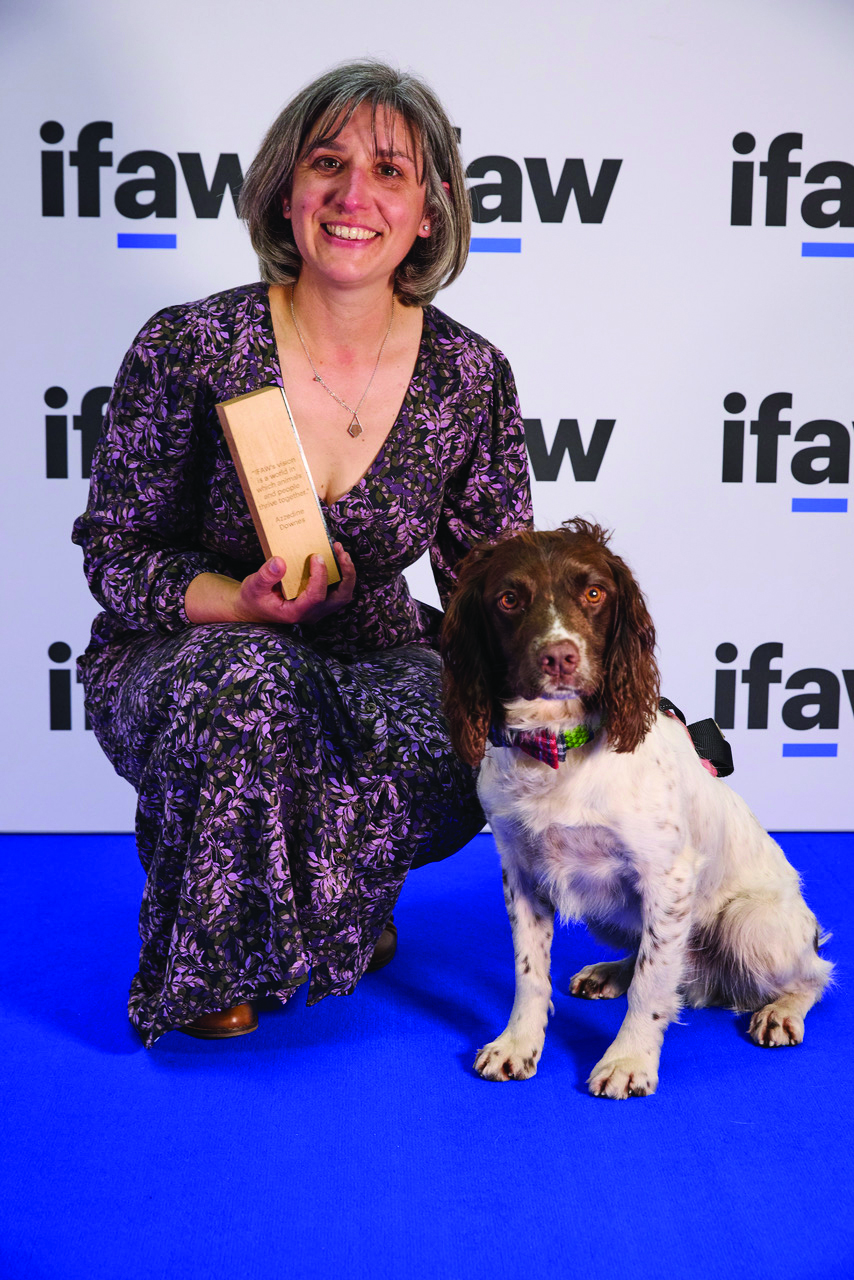
An English Springer Spaniel and his handler are celebrating after scooping a prestigious award for their groundbreaking work protecting rare marine life from predators.
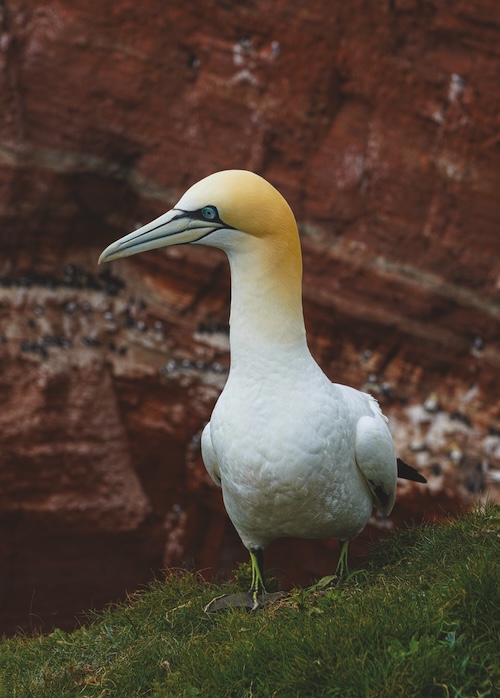
Endangered seabirds living and breeding on remote islands off Scotland have a very special detection dog to thank for their survival. Because Reid, an English Springer Spaniel, has become a vital weapon in efforts to boost declining numbers of Atlantic Puffins, Northern Gannets, Manx Shearwaters, Great Skuas, and Leach’s Storm Petrels, whose fragile habitats are threatened by invasive rodents.
Alongside his owner and handler, Rachel Cripps, the six-year-old spaniel’s remit is to protect 38 Scottish islands by sniffing out rats before they can decimate seabird populations in their hunt for eggs, chicks, and sometimes even adult birds. Competent swimmers, rats can travel between islands and cover distances of up to two kilometres as they seek new habitats, food sources, or to escape predators.
“People don’t realise how easy it is for a rat to get to an island,” explained conservationist Rachel, who’s been working on the *Biosecurity for Scotland project for more than a year.
“Rats are hugely problematic. If one pregnant female reaches an island, then the population could explode – within eight months there could be as many as 300 rats.
“Reid helps us locate any rodents fast, as he can search for their scent, nests, or droppings.”
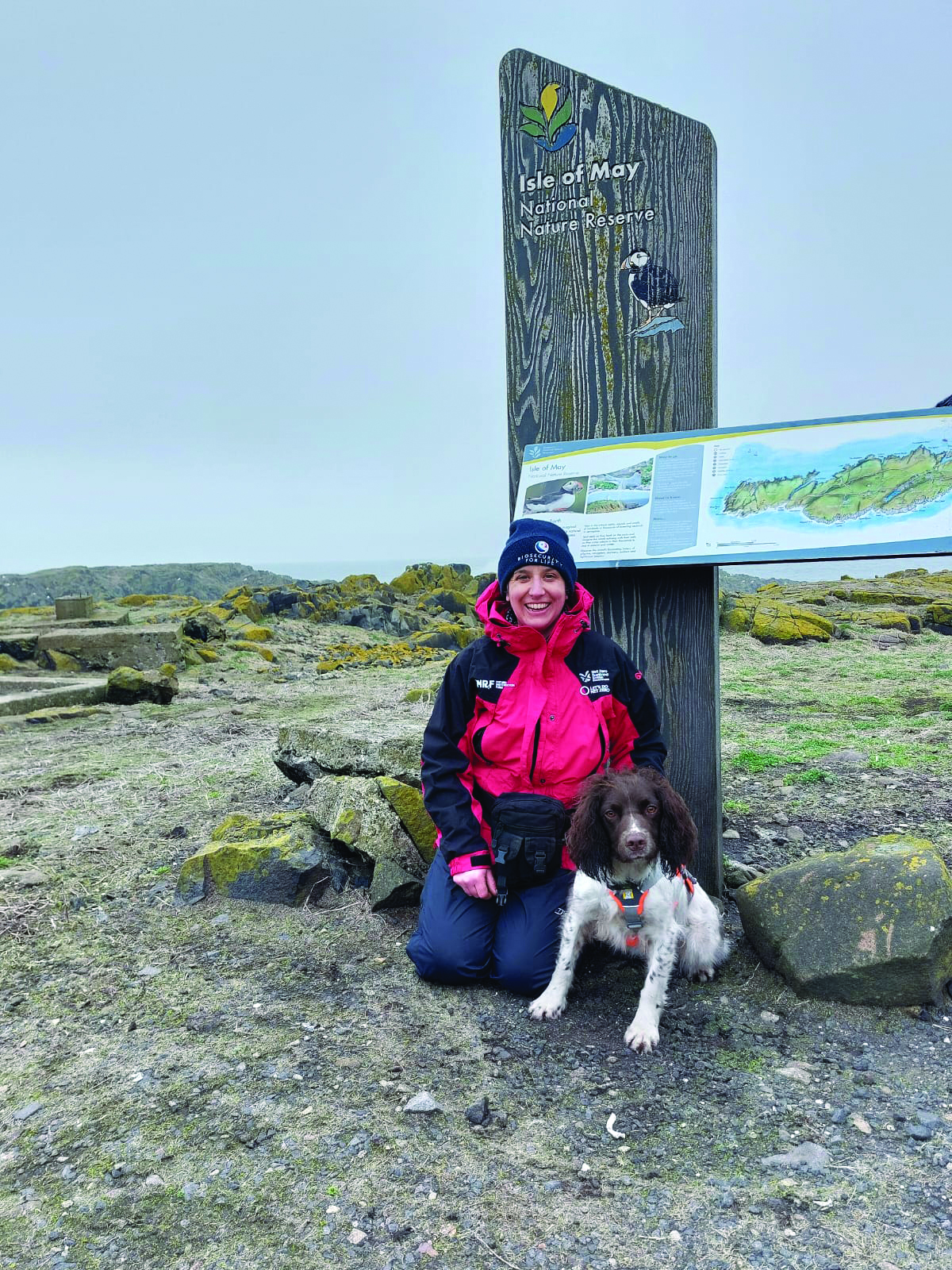
Reid’s work is vital in ensuring islands such as Bass Rock – home of the world’s largest colony of breeding Northern Gannets, and St Kilda, which boasts the UK’s largest Puffin colony – remain rat-free.
Detection training
After graduating as a detection dog from canine training specialists Kryus Limited, Reid was trained by Rachel to sniff out bat carcasses at wind turbine sites before focusing on detecting water voles.
“Reid is happiest when he’s working – he lives to work!” said Rachel, who’s from Liverpool. “I knew early on that he needed a job to do and although he took a little while to mature, he possessed all the necessary qualities to be a good a detection dog. Reid has endless energy, his motivation for a tennis ball is through the roof, and his problem-solving skills are ridiculous: he can break into every cupboard in the house to get a toy.”
Although Rachel admitted that training Reid on rat odour was easy, getting him used to the harsh and rugged environments, and ensuring he was comfortable on boat journeys, was more challenging.
“Some islands are totally uninhabited, and we could be on one for as long six hours,” she continued, adding that Reid first had to learn the difference between a motionless bat carcass and a moving live rat.
“It took a couple of months for him to settle into the role – plus he needed time to adapt to being on chuggy, noisy boats.”
After landing on an island, Rachel and Reid take 20 – 30 minutes to decompress from their journey. Then, with his harness on and wearing special boots to protect his paws from sharp, slippery rocks, and ‘doggles’ to shield his eyes from prickly thistles and brambles, Reid starts searching the tricky terrain, as well as any high-risk cargo, such as animal feed and bedding, brought to the island.
Conservation success
It’s hoped that this preventative approach will contribute towards reversing the decline in endangered Scottish seabird populations, which are also under pressure from climate change, fishing, and bird flu. In 2021, NatureScot found that numbers of 11 breeding seabird species had halved since the 1980s, while invasive mammalian predators have succeeded in totally wiping out Manx Shearwaters from 12 Scottish islands. In fact, invasive non-native mammalian predators are responsible for 58 per cent of bird, mammal, and reptile extinctions globally.
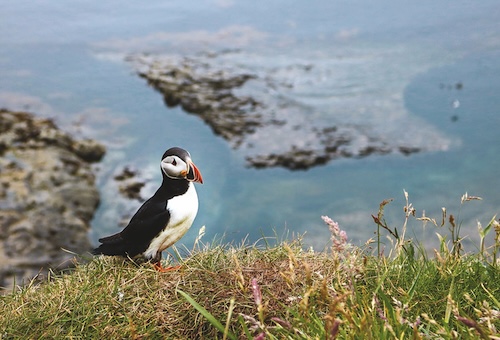
Removing rats from Lundy, in the Bristol Channel, has resulted in an increase in the Puffin population from just 13 birds in 2008 to 1,335 birds in 2023. And on Rathlin, an island off the coast of Northern Ireland, two-year-old fox red Labrador Woody and his handler Ulf Keller are helping to protect Puffins by locating rats and ferrets as part of LIFE Raft, a £4.5m multi-partner project. Already, thanks to Woody, nearly 100 ferrets have been captured and removed, and work has started on controlling an estimated 10,000 rats on the four-mile-wide island.
“Dogs are proving to be an active and effective detection tool, offering an extra layer of protection as it’s difficult for people to reach many of these islands due to their remoteness and terrain with dense vegetation, crags, and steep climbs,” added Rachel, whose first detection dog was Max, a German Shepherd X Belgian Malinois.
Having always had a family dog while growing up, the 42-year-old took on the former pyrotechnics detection dog, who’d been left traumatised after a flare was thrown at him during a football match. She successfully retrained Max to work on a red squirrel conservation project, which he excelled at.
As well as actively detecting predators, Rachel and Reid undertake outreach work in schools and at ports, helping to educate children and boat, ferry, and cargo operators in the importance of bio-security. Their engagement work in schools, where pupils get to meet Reid and play a game to find rats in cargo, has proved particularly popular and attracted encouraging feedback.
Award win
In fact, Reid’s pioneering role in helping to safeguard endangered Scottish seabirds has been recognised with a prestigious award from the International Fund for Animal Welfare (IFAW). The liver and white spaniel was named Animal of the Year at the global organisation’s 2024 annual Animal Action Awards, which shone a light on unsung heroes in animal welfare. Winning the award was a huge surprise and honour for Rachel, who’d driven straight from Scotland to the glitzy award ceremony at the BAFTA London, where her special dog was “treated like a superstar.”
“I’m so proud of Reid,” she added. “He works so hard and often has to endure difficult boat journeys. This is such a big achievement, and I really hope it goes to show the potential for how dogs can play a vital role in conservation.”
Rachel will spend the winter writing up reports from her island visits in 2024 and preparing for her next trip in March/April, depending on weather conditions and tides.
Each visit involves a great deal of planning and a full risk assessment of the island’s terrain, weather conditions, tides, and transport. Rachel speaks to the reserve managers in advance, noting any high-risk areas for rats and the likely habitats where they might find food or shelter.
Meanwhile, Reid will be tasked with training exercises in builders’ yards and at ports, searching cargo and vessels, to keep him on his toes. Although this important project has secured funding until March 2026, Rachel hopes it will be extended as the benefits dogs bring to conservation become more widely recognised.
Credit: Rachel Cripps
Biosecurity for Scotland
This is a project that brings together organisations, island communities, and businesses to safeguard Scotland’s internationally important seabird islands from invasive non-native mammalian predators. This work is funded by the Scottish Government’s Nature Restoration Fund, managed by NatureScot, and is led by RSPB Scotland, the National Trust for Scotland and NatureScot.