


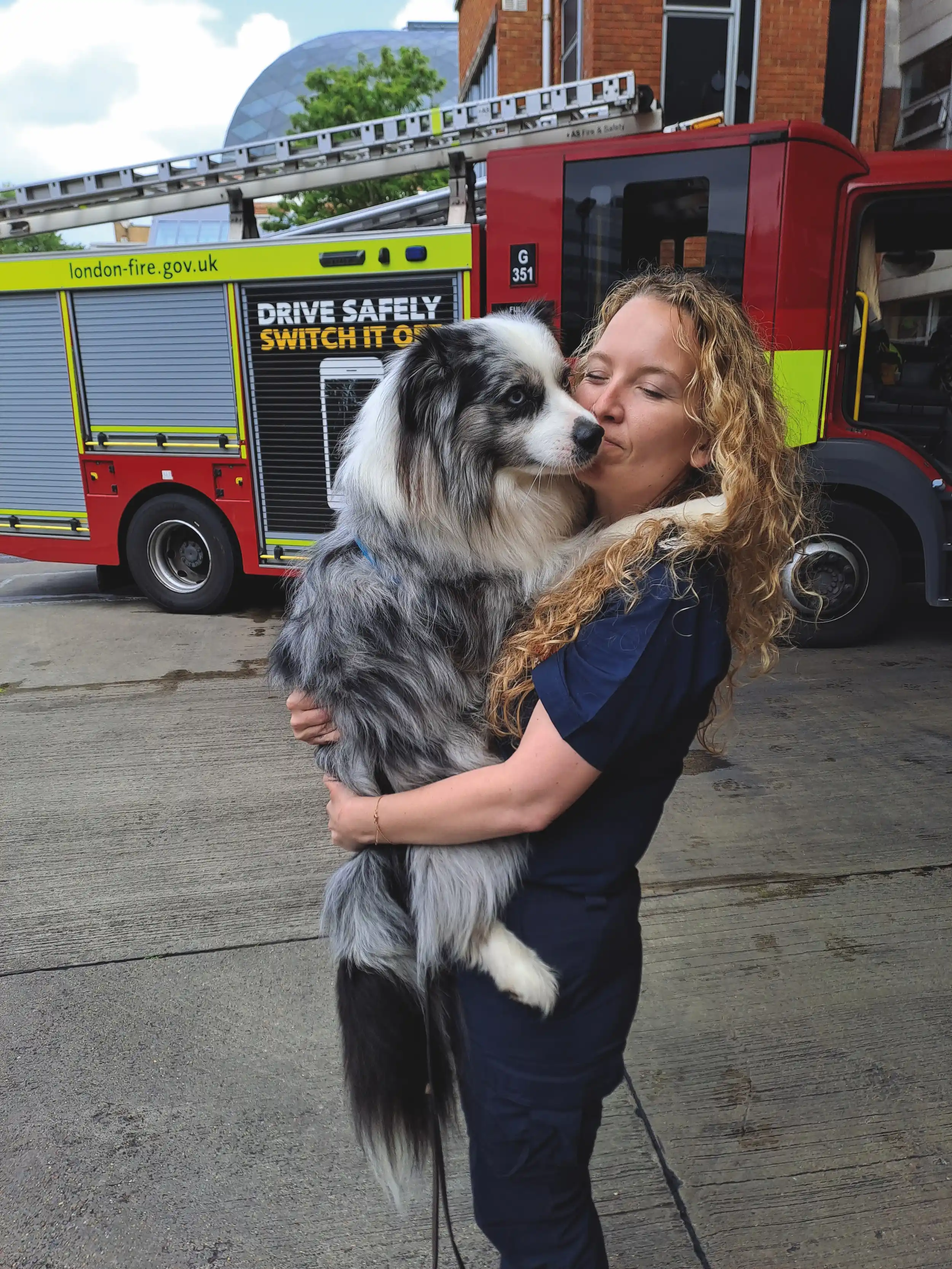
London Fire Brigade’s well-being team has welcomed six new canine recruits to help boost staff morale following traumatic incidents. Joanne Bednall finds out more about one of these special dogs
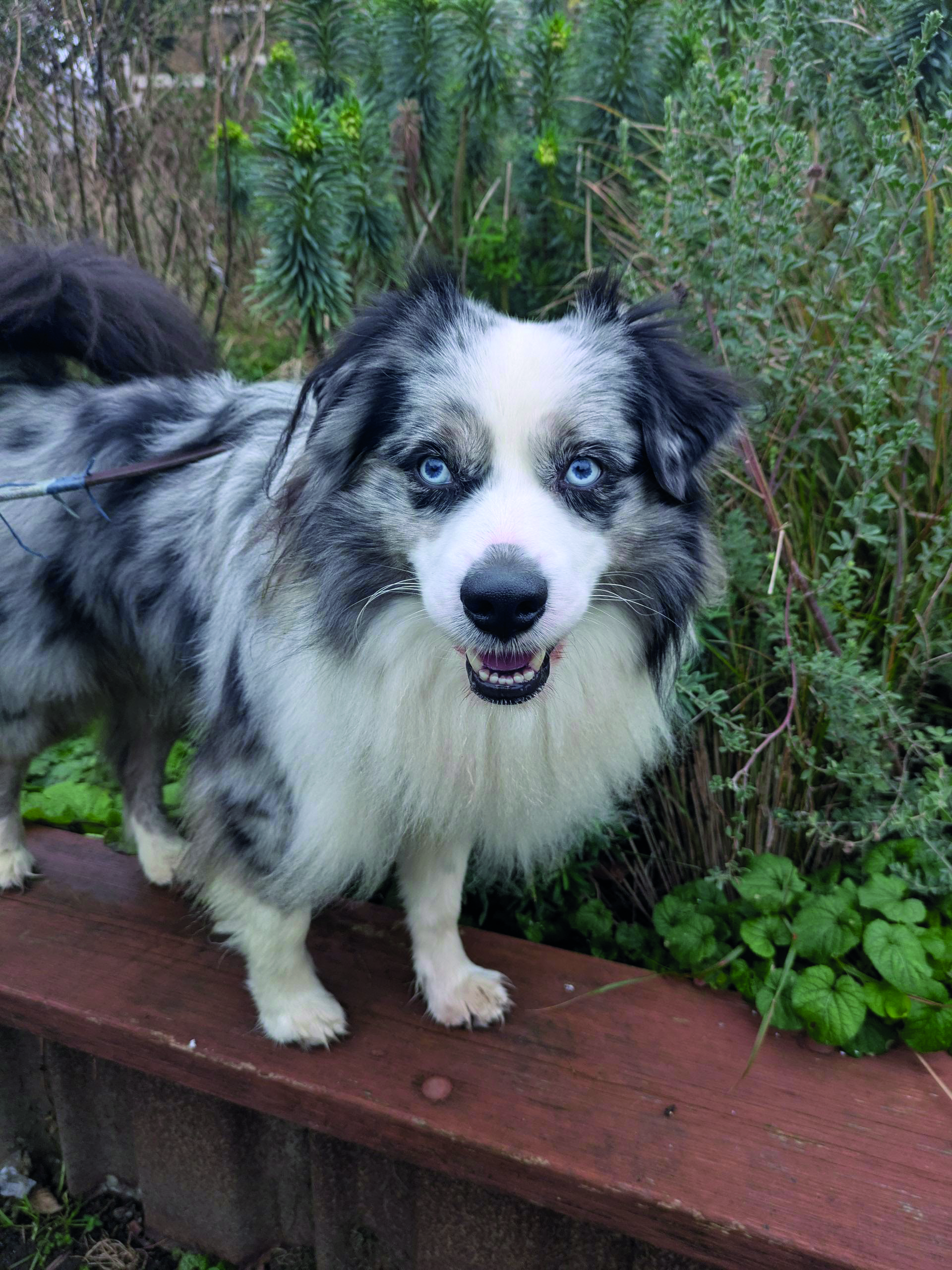
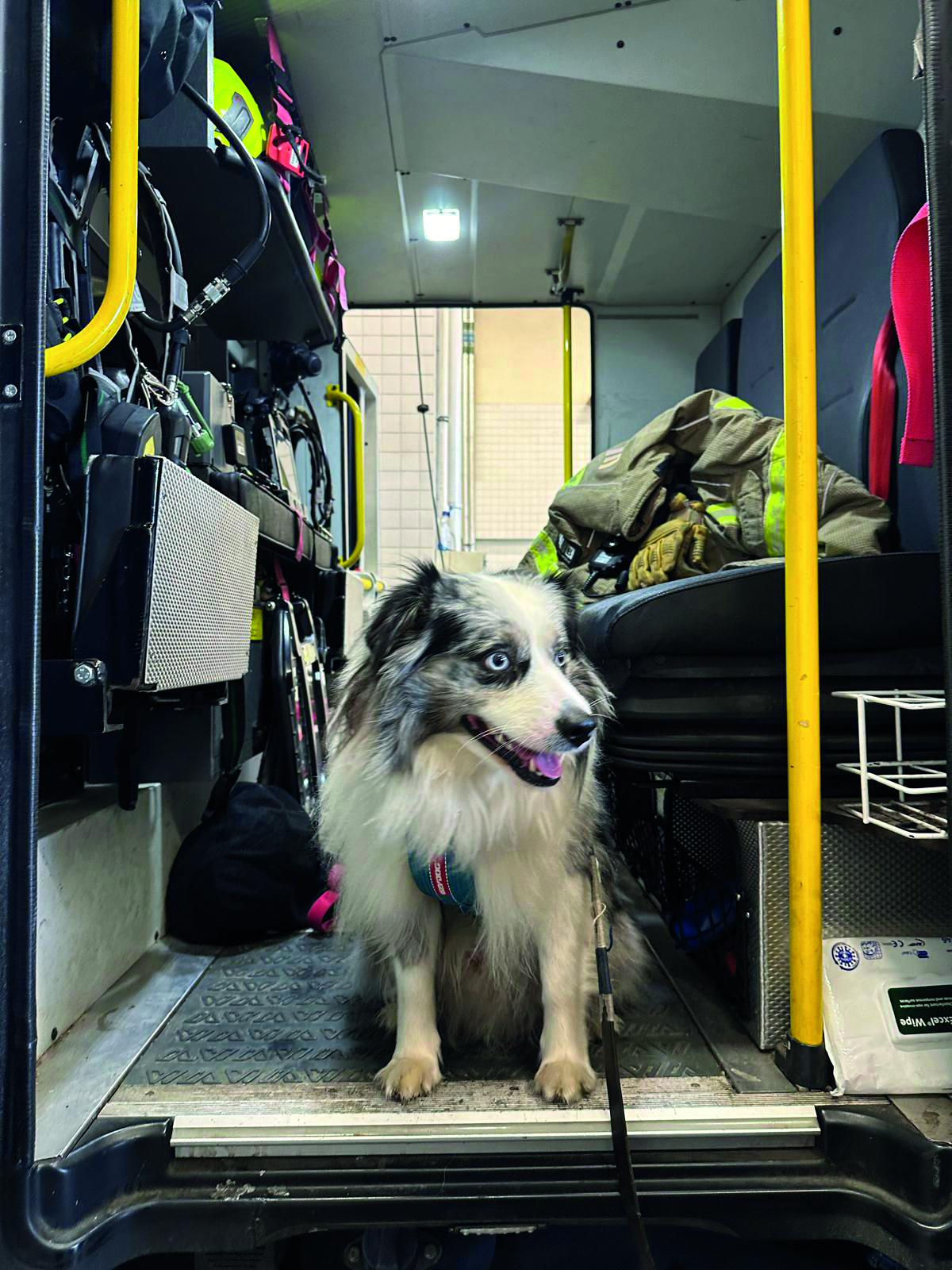
One minute, well-being dog Blue is off-duty, paddle-boarding down the River Thames with his handler, Lucy MacLeod, and the next, he’s supporting London firefighters through a distressing or challenging situation, or attending a fire station open day. The two-year-old miniature Australian Shepherd, whom Lucy describes as “an absolute love”, boasts all the qualities required for the role – and much more besides.
“Blue found me,” explained Lucy, the Borough Commander for Hammersmith and Fulham, who was looking to fill the “huge vacuum” left in her life after losing her previous dog, Poppy, and wanted a working breed of the right temperament that she could train to do trauma work. With her family hailing from Down Under, Lucy was already familiar with Australian Shepherds, and admired their intelligence, toughness, activity levels, stamina, loyalty, and low-fuss work ethic.
“I wanted a dog that wouldn’t worry about people or loud or strange noises, and was adaptable, flexible, friendly and happy not to be tied to a routine – I feel very blessed to have Blue,” said Lucy, who’s owned him since he was a puppy.
Credit: Lucy MacLeod
Well-being dog
Joining London Fire Brigade’s well-being team seemed a natural fit for Lucy, who was already qualified in trauma support, which involves providing critical debriefing for people who’ve worked in traumatic situations.
“The role seemed an ideal way of combining my job with the Fire Service, my love of dogs, and helping people,” continued Lucy,
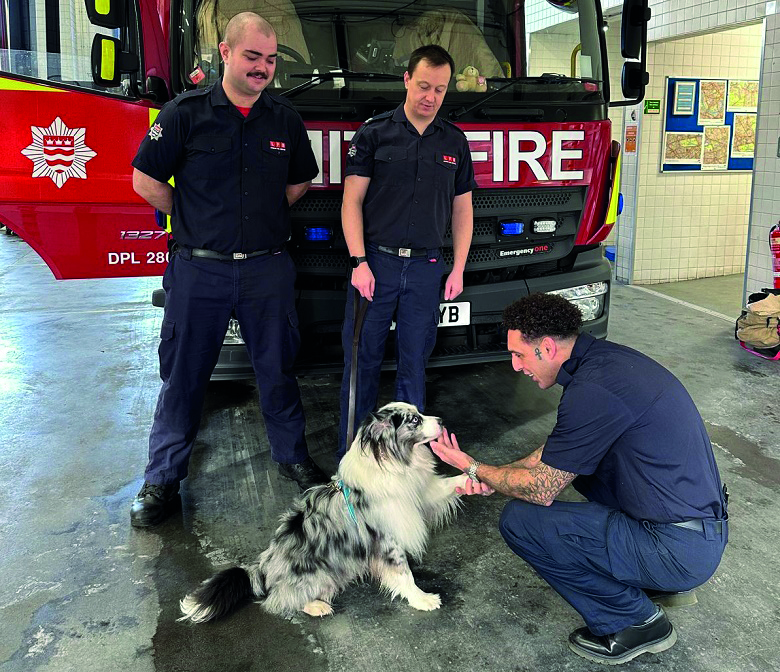
Following the graduation of Blue and five other dogs and handlers, there are now 10 combinations that are part of the Brigade’s well-being team. All handlers are qualified staff who volunteer to visit fire stations in their free time with their own dogs to help boost firefighters’ morale, provide a positive distraction, and encourage staff to talk openly and honestly about subjects such as mental health and well-being.
Last year, well-being dogs and their handlers made around 30 visits to fire stations, open days, and other Brigade departments across London, and are on hand to visit any one of the 102 fire stations around the capital upon request.
Credit: Lucy MacLeod
Recognising the positive impact that dogs can have on personnel struggling to process distressing or challenging incidents, such as fatalities caused by burning buildings or train or car accidents, the Brigade-wide scheme was launched in 2017 by Stanmore firefighter, Shelley Robinson. Following its initial success, the project was expanded six years later by well-being team leaders, Sarah Jane King and Katie Pelzman, with support from the Brigade control room Assistant Operations Manager, Becci Dingvean, who qualified as a dog handler and has gone on to train others.
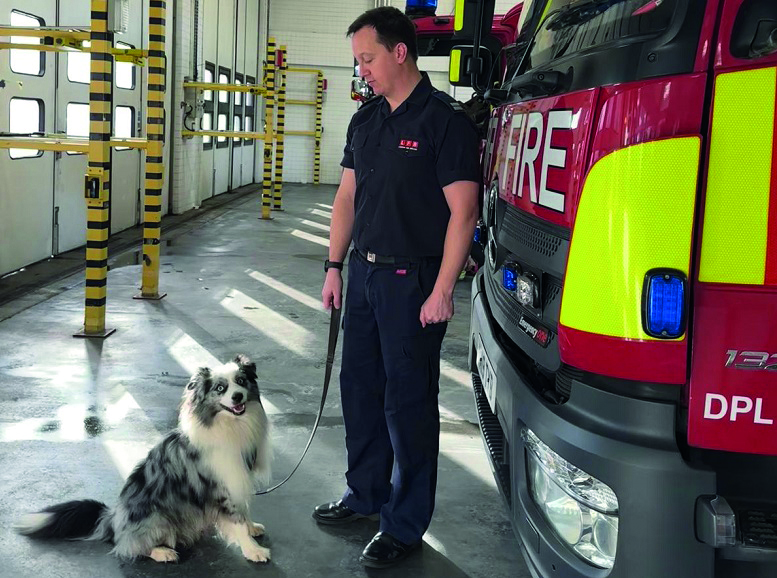
It’s been a long and rewarding journey for Lucy, who applied for the role when Blue was just four months old but had to wait until he was two before he could finish his training and graduate in December. In order to gain their qualification to support colleagues, the pair have completed 20 intensive modules as part of the Oscar Kilo 9 (OK9) Dogs Trust Wellbeing and Trauma Dog Handlers course, the national wellbeing and trauma support dog scheme for the police, fire and rescue, and other emergency services across the UK. In addition, Blue also passed a behavioural assessment, which included testing his response to fire station sounds, such as sirens, air brakes, and call bells, plus Lucy attended a two-day mental health first aiders course, as well as a one-day OK9 peer support course.
Credit: Lucy MacLeod
Canine instinct
“It does take a special type of dog to take on this work,” explained Lucy, who grew up with Silky and Yorkshire Terriers. “Blue has the right temperament, and is very friendly and calm around humans, loves being stroked and made a fuss of and adores children.
“He’s also very patient, flexible, and easy to train, and is a natural at zoning in on the people who need him most. He just knows, and has a knack of reducing stress in a room and making things more positive so people are able to talk about how they’re feeling.
“In fact, we’ve found that our staff are more likely to chat openly and honestly about subjects like mental health and wellbeing when four-legged friends are around. There’s no judgement from a dog and Blue doesn’t discriminate. He is often the light in the room when things appear really dark.”
Lucy added that well-being dogs can be key to bridging the gap between early interventions, such as peer-based post incident support, and more structured trauma support provided by the Brigade.
“The project has been really well received and our well-being dogs have been embraced by both firefighters and support staff,” added Lucy, who recalled two recent heart-warming reactions to Blue: “One lady cuddled him, buried her face in his fluff and said, ‘He’s made my day so much better!’ Another, who admitted to being worried about dogs, was happy to stroke him."
Credit: Lucy MacLeod
However, while demand is currently exceeding what the team can give, Lucy stressed they are careful not to over-work their dogs and limit the time they spend travelling, or on public transport. Mindful that her blue merle dog is still young, Lucy doesn’t want to over-burden him, so ensures each weekly or twice-monthly visit lasts no longer than two hours and includes lots of breaks.
“I take Blue out on regular ‘sniffaris’ where he can just be a dog, before going back in and doing more,” she explained.
As well as talking about their role and offering comfort, Lucy revealed that Blue has another ace up his sleeve when it comes to lightening the atmosphere, drawing a few smiles, and encouraging staff to unwind and de-stress.
“He can perform a range of tricks on command, such as sitting, lying down, spinning, and pushing a button for a treat. And sometimes, just the rhythm of walking with Blue, when there’s no direct eye contact with another human, can help people open up about their feelings.”
As well as local proactive visits, Lucy is keen to do more reactive work, adding that Blue is able to respond nationally if required. Although the duo themselves weren’t involved, members of the team were on hand to support those who responded to the Southport stabbings last summer.
Following successful feedback, plans are now afoot to schedule specific visits following particularly distressing incidents, while it’s hoped that in the coming months, the well-being team will be expanded even further with the recruitment of more dogs and handlers.
“I am beaming right now,” added Lucy. “I love being positive, widening people’s understanding of mental health and talking about my dog – I am super-proud of Blue and what he’s achieved.”