


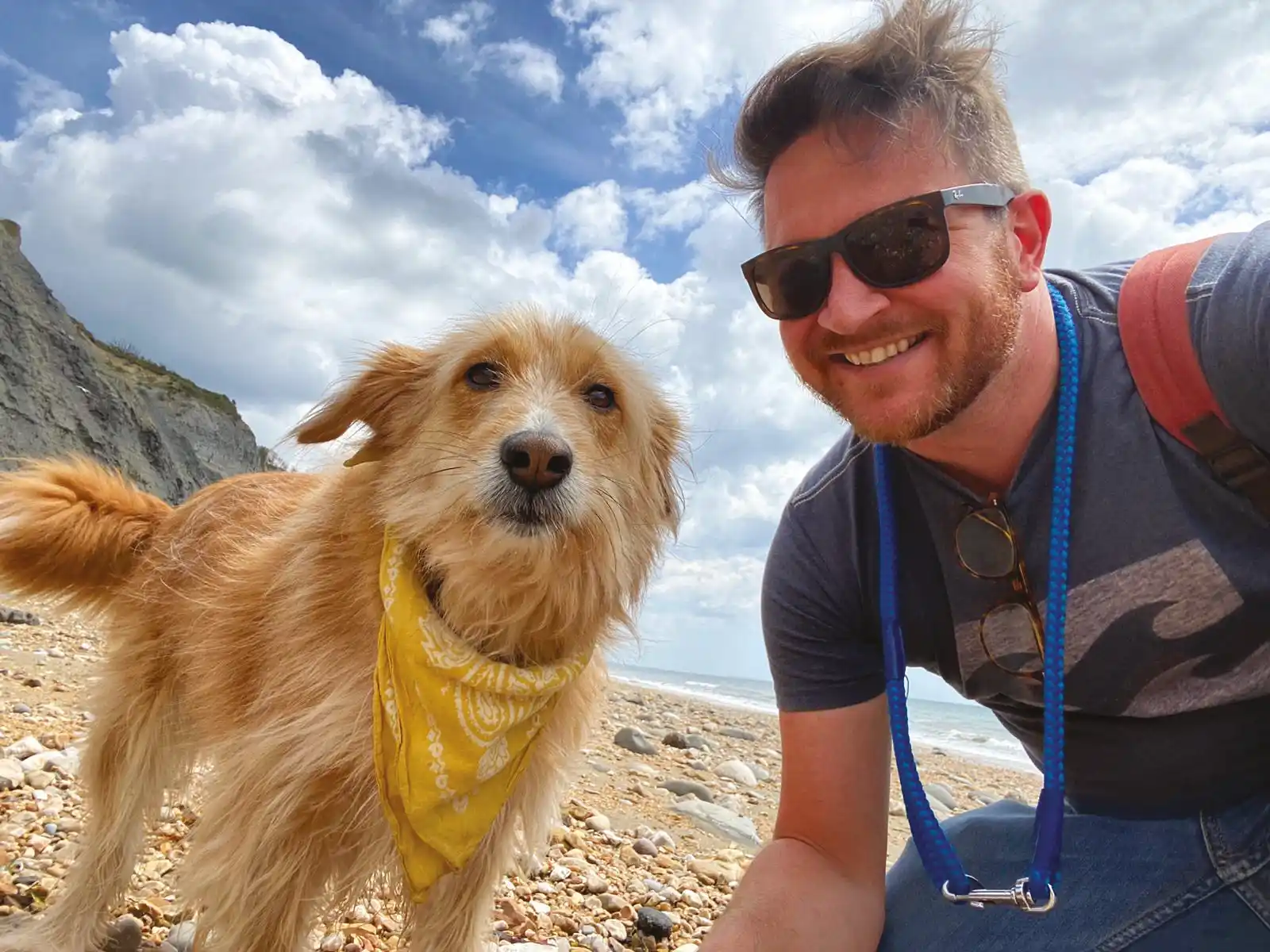
Celebrated conservationist, biologist, broadcaster, and author, Professor Ben Garrod, tells Joanne Bednall how Jack, his adopted dog from Africa, has changed his life and inspired a series of engaging children’s books.
Q1. You and Jack have become inseparable since you first met in 2018 while filming Baby Chimp Rescue in Liberia. What are your memories of that first encounter?
Ben: “It literally was like a Hollywood romance – our eyes just met! At the time, Jack was one of a number of therapy dogs running free at the chimpanzee sanctuary. Many of the orphan chimps were so traumatised that they didn’t want to be around humans, but they benefited from the dogs’ presence.
“I first noticed Jack sitting in a corner. Aloof, scrawny, gangly, and hairy, he looked ridiculous and rather out of place, but I thought he was an interesting little dog. Over the next two years, I increasingly looked forward to seeing him when I arrived at the sanctuary. Despite him having the odd flea or two, and endlessly itchy ears from an infection, I fell in love with him. At first, he wasn’t bothered about me, but when he finally ran up and greeted me on one trip, this was the point I thought, ‘He actually likes me now!’”
Q2. Jack has an endearing expression and unique appearance – any idea what breed he is?
Ben: “No-one knows his background; he’s an enigma! Jack isn’t really a ‘breed’ as such; he’s ‘just a dog’. The best way to describe him is ‘genetically beige.’ While he’s stocky like a typical African village dog, they are generally short-haired. His hairy appearance is a genetic anomaly; a quirk.”
Q3. Did the journey from your first meeting to arriving in the UK run as smoothly as you’d hoped?
Ben: “It was definitely a challenge! At the time, there was no protocol for bringing dogs from Liberia – one of the world’s poorest countries – to the UK and Jack was the first. Once I’d got a permit, Jack was screened for a range of diseases before being given a clean bill of health. He hated having his blood taken, and he hated having a bath in the hotel room before his flight. It was a true comedy circus moment at the tiny international airport when everyone kept asking me, ‘Why do you want this dog…?’”
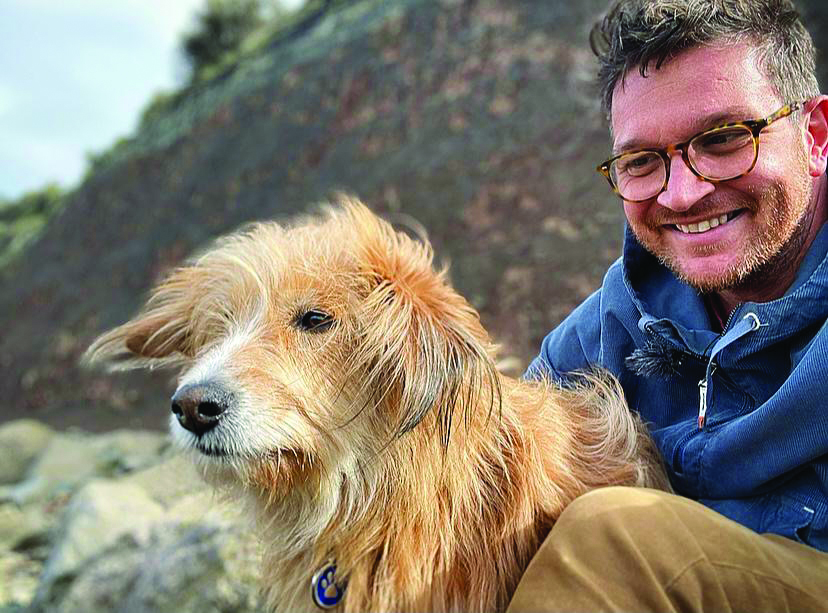
Jack and Ben in the UK
Q4. What were the main things you really had to work on when integrating Jack into his new life in the UK?
Ben: “Jack had never been indoors, on the lead, in a car, or had a bath before. He was effectively feral. But he just accepted everything I threw at him.
“The first thing I focused on after arriving in the UK was road obedience. Jack had only ever known a dirt track in the African bush, so he found busy roads in a noisy city the hardest thing to adapt to. Instead of shielding him from it, I chose to immerse him in it, so devoted a lot of time training him to sit by the side of the road. On one occasion, a neighbour walked past us during a training session, and returned an hour later to see Jack and me in exactly the same place with me still saying ‘Sit!’”
Q5. Did it take long for your cat Newbie and the chickens to accept Jack or is their relationship still a work in progress?
Ben: “Jack lived with all these animals before – the chickens in Liberia are more Jurassic Park than Chicken Run – so he’s not bothered by ours. There was one tense afternoon with Newbie, but he just walked away from any confrontation, and she gave up in the end. Rosie, a big brown dominant hen, loves Jack, but this isn’t reciprocated – being groomed by her isn’t his idea of a fun afternoon! Jack isn’t a threat to anyone – even the squirrels don’t run away from him!”
Q6. You describe Jack as ‘the most adorable animal person on the planet’, but also the ‘most complicated’. Please could you expand a little on the latter…?
Ben: “Jack can give me this judgmental side-look and be so stubborn. Recently, we were on the beach with my dad and his well-trained Labrador. When it was time to leave, Jack ended up a quarter of a mile back behind us, still sat on the beach: he wasn’t ready to go just yet. Frustrated, my dad said: ‘Why don’t you make him?’ I replied: ‘Well, why don’t you?!’ I didn’t want Jack to lose his individuality and independence, so this is the price I’ve had to pay!”
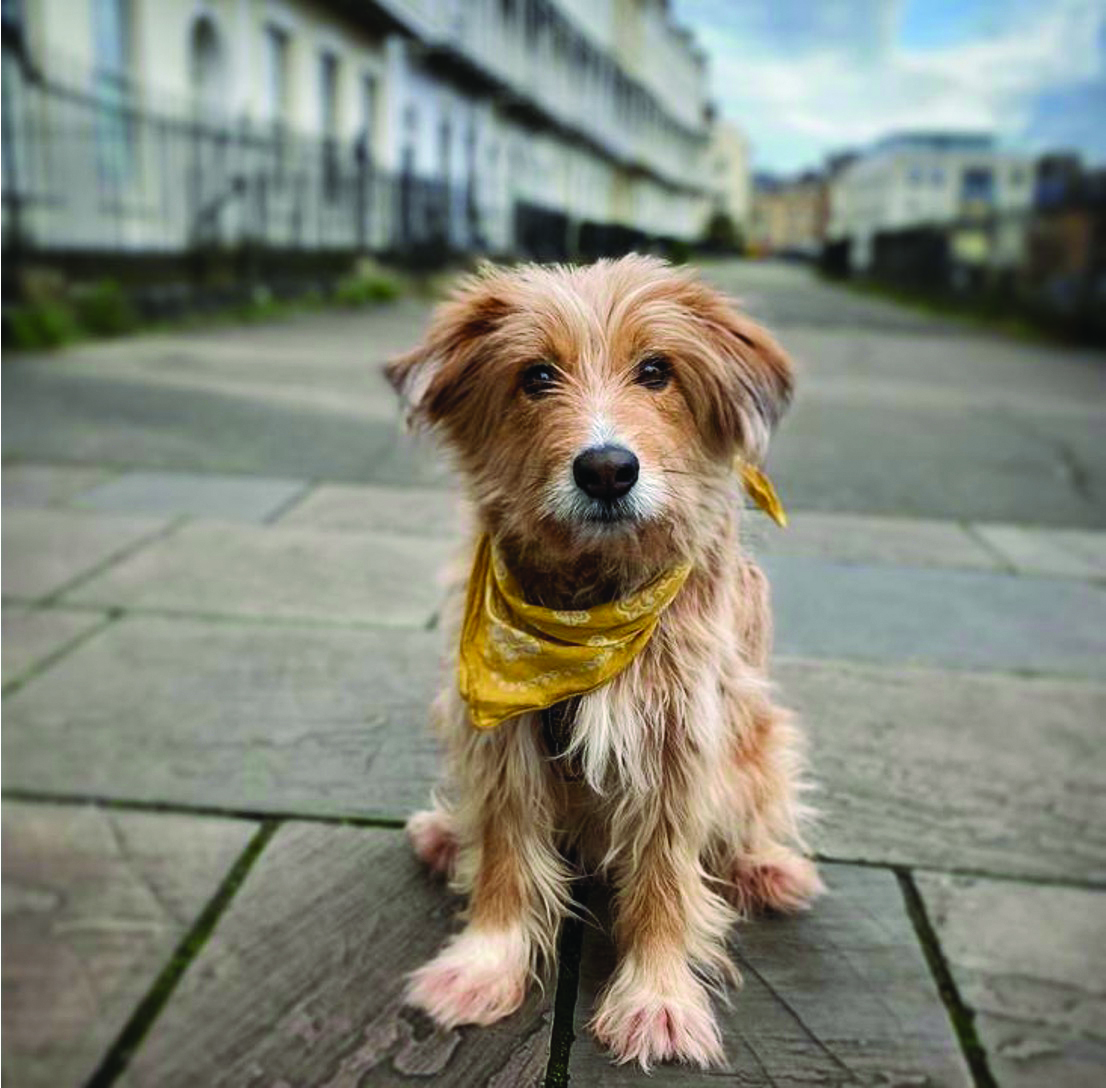
Jack in the UK
Q7. Jack has become quite the small screen star since arriving in the UK in 2020. Tell us a bit about the TV documentaries he’s appeared in, and whether he gets recognised by fans in the street.
Ben: “Jack’s appeared in BBC Two’s Baby Chimp Rescue, and BBC Four’s Secrets of Skin, when we both went for a run so we could look at sweating. Except Jack wouldn’t run fast or far enough – he’s so lazy – and that segment took a day to film. He’s also been on radio, but you wouldn’t know it because he doesn’t bark.
“He definitely gets recognised more than me when we’re out and about in Bristol. Just yesterday, a guy and his wife came up to say that Jack looked just like a dog they’d seen on TV the night before. When they found out the dog was Jack, they wanted their picture taken with him but said that they didn’t recognise me!
“If I’m ever trying to get from A to B with my agent, it always takes us 10-15 minutes longer because people keep stopping us to say hello to Jack, or someone wants to give him a carrot in the greengrocer’s or a treat in the bookshop.”
Q8. Much of your work takes you to many far-flung places around the globe – what happens to Jack when you are away?
Ben: “Jack comes with me everywhere in the UK, whether it’s to a lecture, presentation or recording. He even accompanied me on stage at the Hay Festival. If I go abroad, neighbours, friends, or family have him and he gets totally spoiled. I get back and they say, ‘He won’t go for a walk.’ So, I reply, ‘He’s lazy!’ Then they say: ‘He was very hungry.’ And I reply: ‘He’s greedy!’ He’s very intelligent and knows how to get his own way.”
Q9. Did your family have dogs when you were a child, or is Jack your first?
Ben: “Growing up, my family had all kinds of dogs, and I remember having a Cairn Terrier. My first dog as a young adult was a terrier called Toby, who died 10 years ago. It was tough losing him; he’d been with me from late adolescence and was a very special dog.”
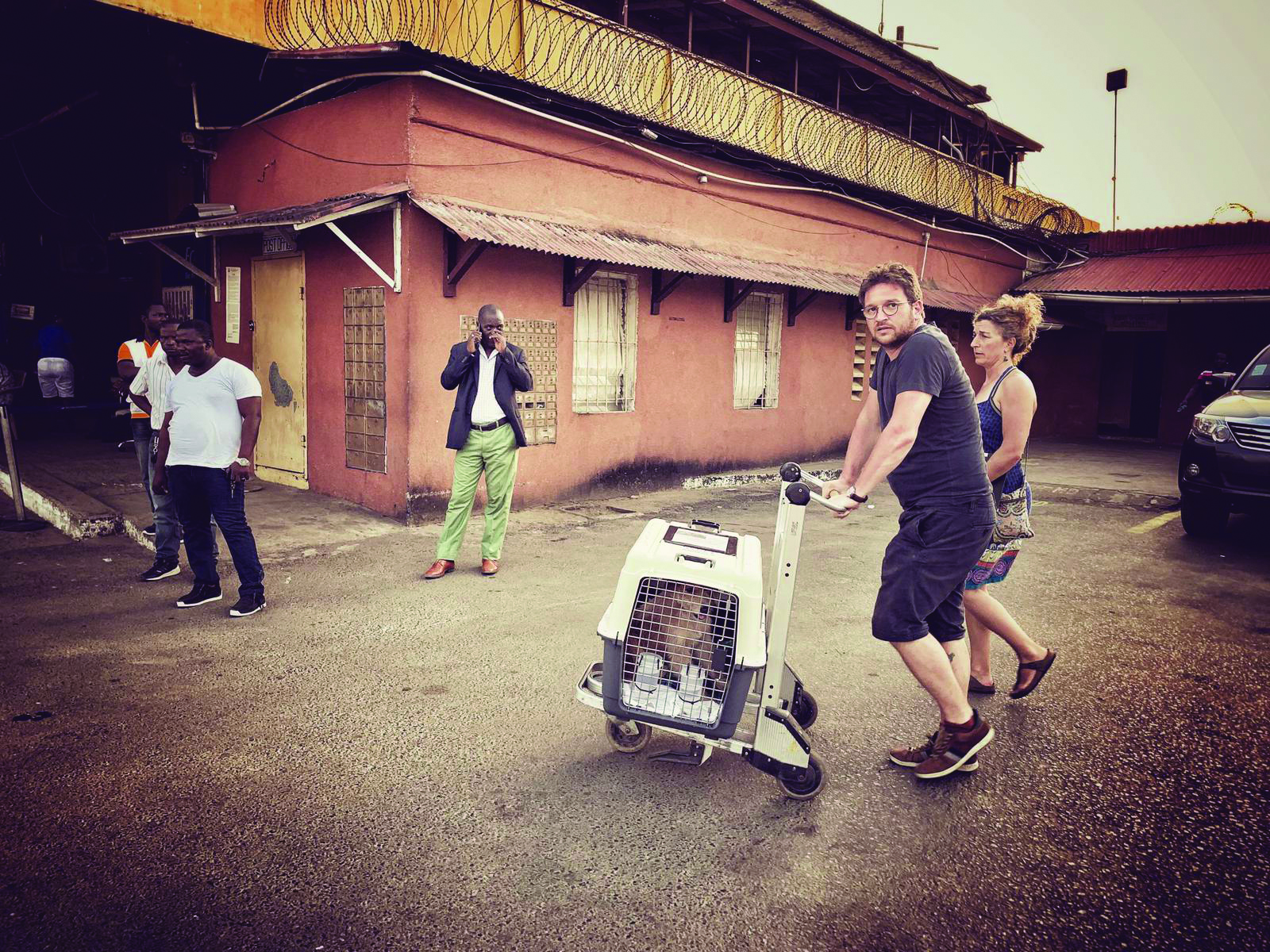
Jack in Africa
Q10. Can you remember the lightbulb moment when Jack inspired the idea for your Jack-Jack series? And do you find it easier to write fiction or non-fiction?
Ben: “A couple of years ago, I took Jack to see my 97-year-old granny, who used to have German Shepherds. She said to me: ‘What a story he’s got! You could write a book for children – they’d love that.’ So, two weeks later, I mentioned this to my publishers, who said they’d already been talking about the idea.
“I found writing 16 non-fiction children’s books enjoyable and thought it would be easy to write about my dog, but it was harder. I wanted the books to be engaging, funny, entertaining, realistic, and as true to Jack as possible. The first book is about Jack’s life in Africa; the second follows his journey to the UK and being trained from a dog’s perspective; the third charts Jack’s adventures here, and the fourth explores dogs with jobs. Jack has actually tried search and rescue, detecting explosives, and herding sheep, but he was rubbish! Although the books aren’t educational, they still teach children about dogs and training, and are fun – I hope children enjoy reading about a dog for an hour.”
Q11. What has Jack taught you as a dog owner? And what has he learned from you…?
“I’ve realised that I don’t ‘own’ Jack and he doesn’t ‘own’ me – it’s a relationship. While I have never known more about animals than I do now, Jack has taught me that I don’t know as much as I thought I did. I now only have to look at him and he knows what I want him to do – we’ve evolved together.
“I’d like to think Jack has learned that I’m in his corner and he’ll never be alone: we’re in it together. I have a connection with him that makes me feel whole, and I hope he feels the same.”
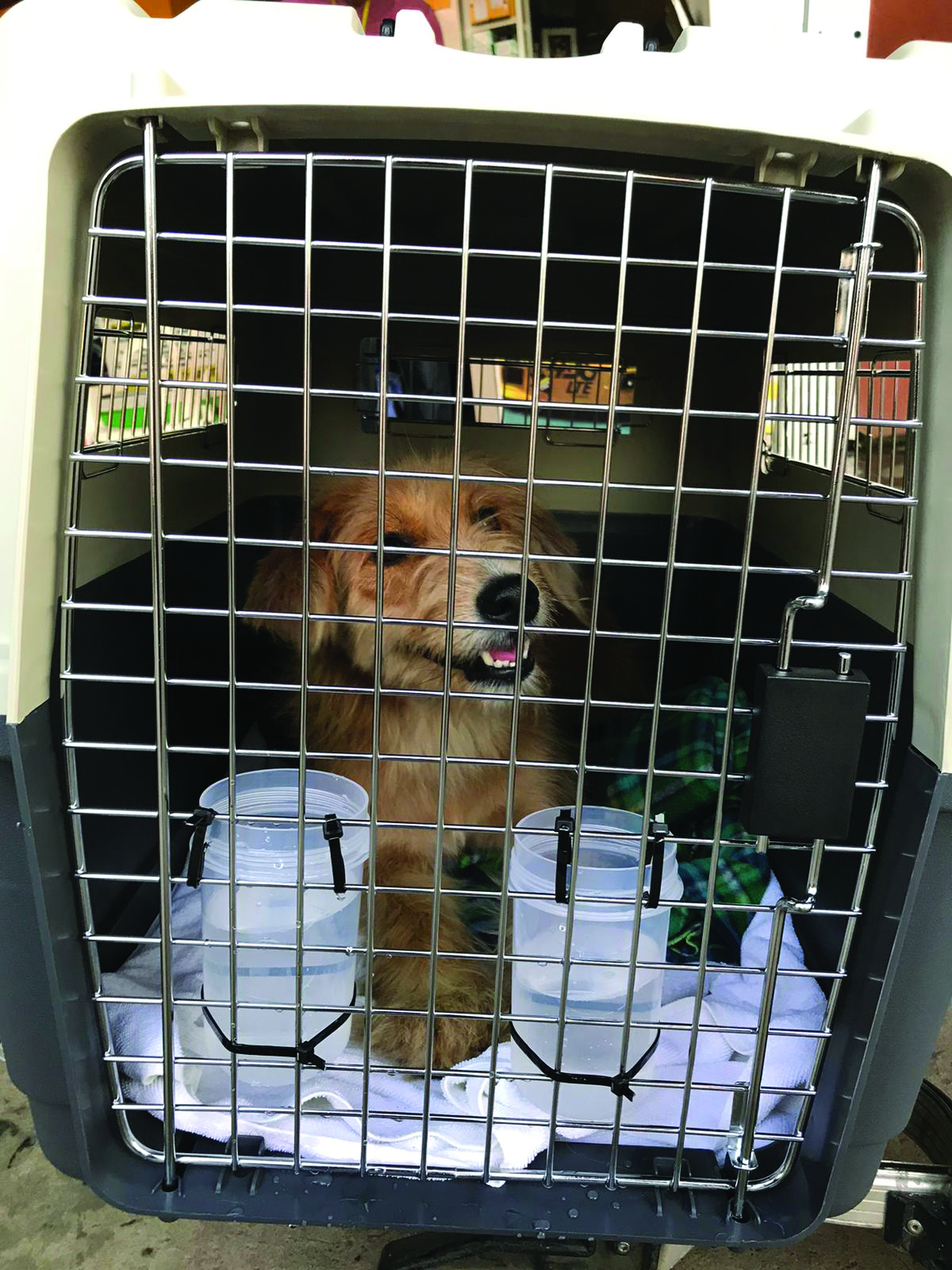
Jack in Africa
Q12. Is rescuing a dog from abroad a noble gesture, or do you think some people don’t give the process enough thought?
Ben: “Adopt, don’t shop, definitely. Many people adopt a dog from abroad because they don’t meet all the criteria to adopt in the UK. However, there does need to be tighter regulations on disease management and control for dogs coming into the country – not just for rabies, but for a whole range of pathogens. I’d also urge people to adopt an older dog – I don’t ever want to have a puppy again!”
Q13. So, what next for you and Jack? A Jack cuddly toy, perhaps, or an animated TV series…?
“A cuddly toy or an animated cartoon about an African street dog would just be amazing! All I can say is that we’re currently in discussions for Jack to become an ambassador for a household brand, which ties in with one of his biggest fears. So, watch this space!”