


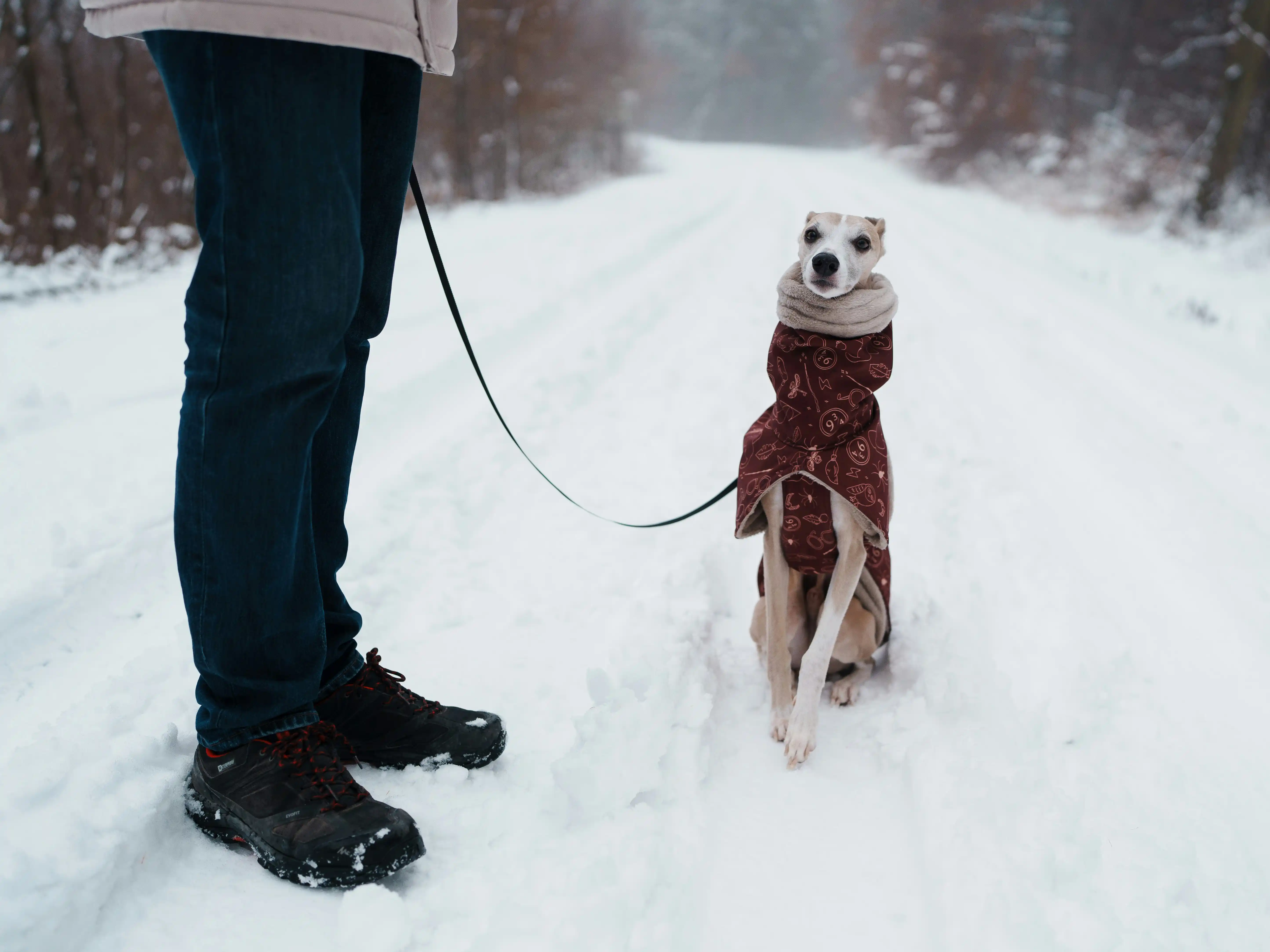
Cold air, short days and slippery paths make winter walks rewarding but demanding. Preparation matters. From layering and footwear to route planning and emergency essentials, these eight practical tips help you stay warm, safe and confident outdoors, whether strolling locally or heading into wilder countryside this winter season ahead now.
1. Dress for the weather

Wind chill can make it feel colder than it actually is. Layers of light clothing will trap air between them, creating an insulating effect, and if you find you get too warm, you can easily shed a layer. Choose wicking fabrics for layers next to your skin, and top everything off with a waterproof jacket. Feet can suffer in cold and wet weather, so replace leaky boots and don thermal socks and boot liners to keep toes feeling toasty.
2. Take care
As temperatures drop, don’t keep puppies or seniors outside too long, or those with health issues such as autoimmune disorders, arthritis, and thyroid disease. Choose walks that have short cuts you can take in case you feel your dog needs to head back home earlier than you’d planned. Signs your dog is feeling the effects of exposure include whining, shivering, anxiety, slowing down, stopping, or looking for somewhere to burrow.
3. Snow danger
Romping in the snow can be fun, but can also be tiring and lead to sprains and strains. As with everything, don’t let your dog overdo it!
Carry a portable water bottle/ drinker for your dog rather than allowing him to eat snow, which may lower his core temperature or could contain harmful chemicals. Don’t encourage him to jump into snow drifts, which may conceal all sorts of dangers.
4. Dress your dog
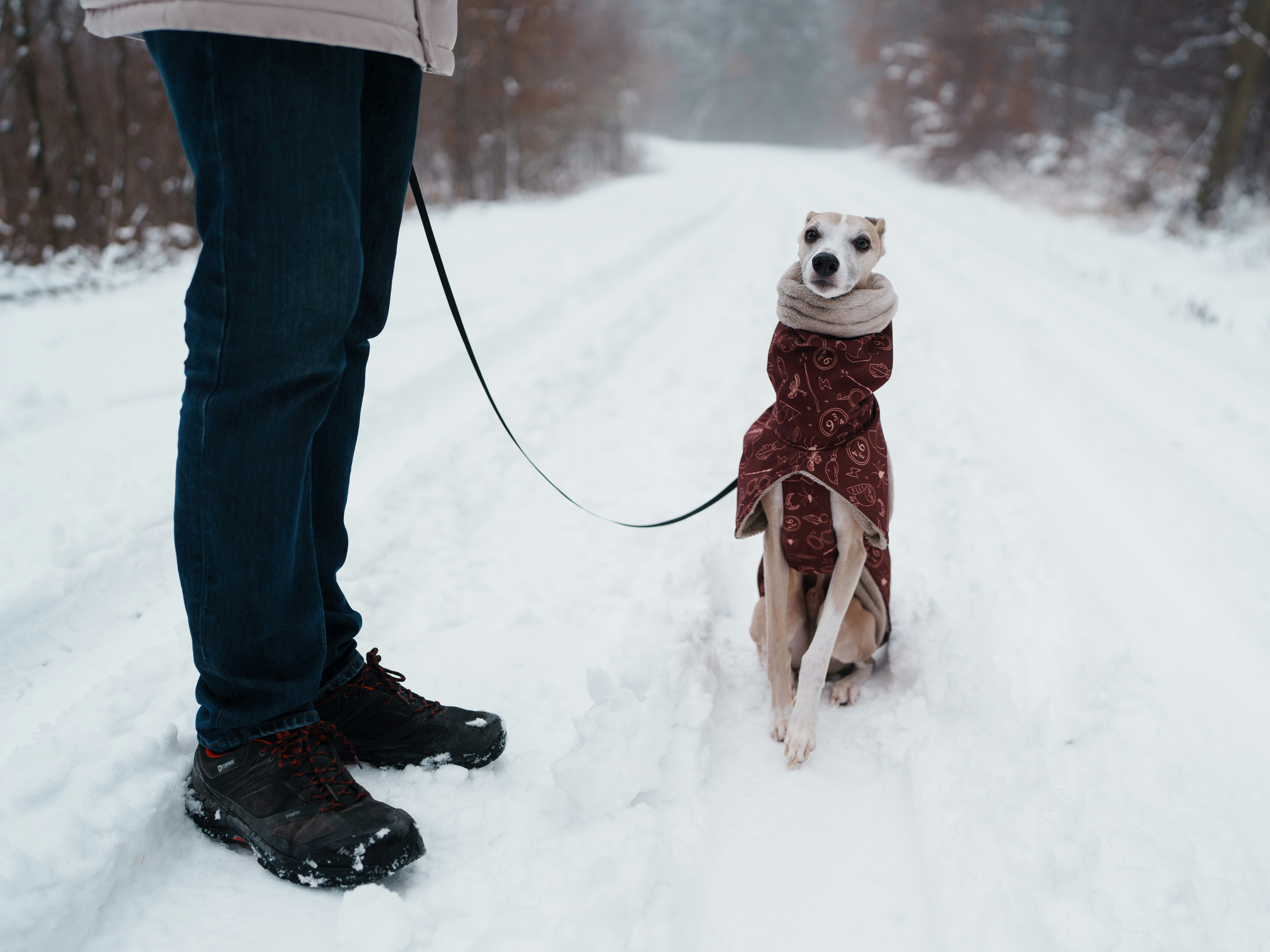
Cosy, waterproof coats will help short-coated dogs, who feel the cold, to cope with the winter weather outdoors. A waterproof coat can be a godsend for shaggy-coated dogs, too, in wet weather and can save a lot of time drying off when you get home. Dogs with sensitive paws may suffer from cut pads when scampering around on frozen ground, in which case you could also invest in a set of boots.
5. Be seen
Be as visible as possible out on walks — not just when it’s dark at night, but during the day as well; weather conditions such as rain, mist, fog, and overcast skies can also make you hard to see. Choose hi-vis garments and accessories with both fluorescent and reflective fabrics, and don’t forget to kit out your dog, too. There are plenty of accessories to tog him up in, including jackets, collars, harnesses, and covers to slip over his lead.
6. Stay safe
Try to stick to well-lit paths. If you have to walk on country roads with no pavement, keep to the right-hand side so you can see oncoming vehicles, with your dog on your right so you’re between him and traffic. Hats or scarves covering your ears can muffle the sounds of approaching vehicles, so take extra care when crossing roads or checking for traffic.
7. Paw care
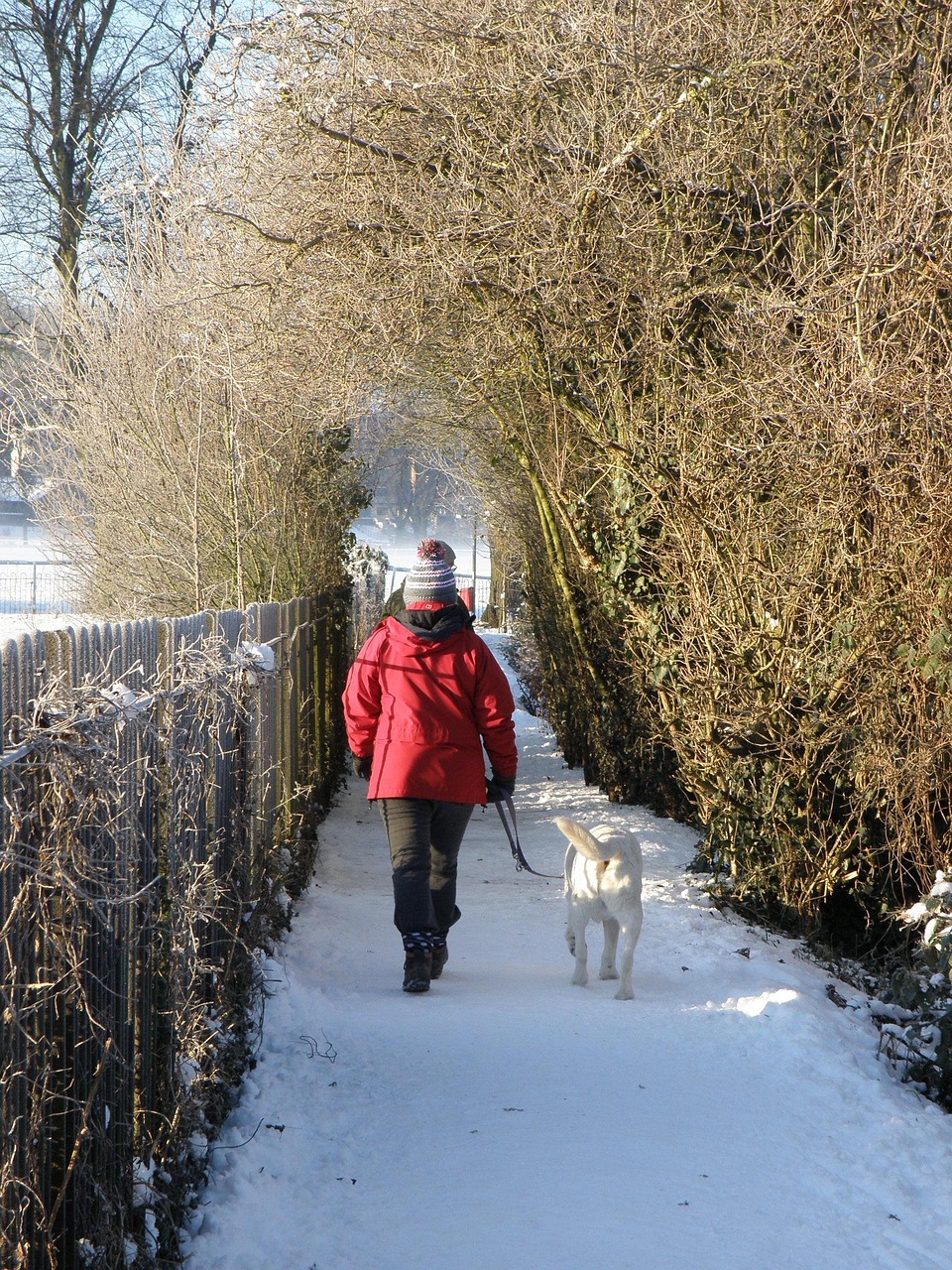
Check paws carefully after walks, cleaning them to remove any salt, grit, or antifreeze your dog may have stepped in, and drying thoroughly. If snow and ice tends to form hard, painful lumps between the toes and pads, carefully trim the hair to help reduce this.
8. Avoid frozen ponds
Every year there’s another tragic incident when someone dies while trying to rescue a dog who has fallen through thin ice covering a pond or lake. Take no chances; keep your pet on the lead near frozen expanses of water.