


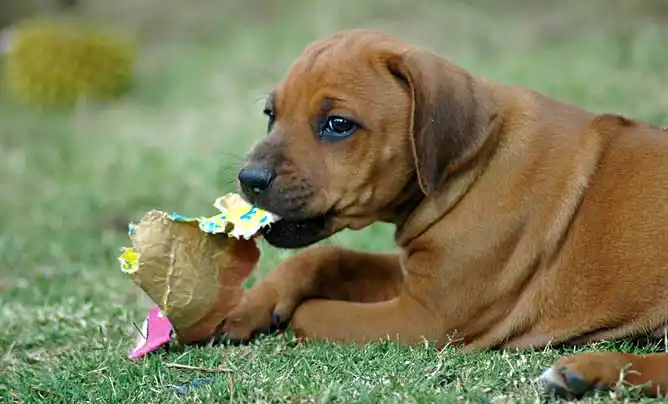
Puppies naturally need to chew. Chewing helps bring through adult teeth and encourages puppy teeth to loosen and fall out, making it a normal and necessary part of development.
In addition to teething, puppies chew to explore the world, which is why everything ends up in their mouths.
How to stop your puppy chewing
When you have a new puppy, prevention is better than cure. Pick up anything that is within your pup's reach and remove it - only leave his own chew toys available to him. Block off access to wires or any other structures that may be dangerous.
Try using a crate - then, when you're not available to supervise your dog, he's in a controlled place and can't destroy your house and belongings. Crate train works differently for different dogs, for more information.
Lastly, if he does start to chew something he should not have, take one of his own toys and do a swap with him. Be aware that some dogs learn to use picking up one of your valued objects and parading it in front of you to get your attention. This is why you need to make sure that you don't make a big deal out of the swap. Stay very calm and quiet - avoid shouting and excitement, and praise and reward the handover.
Puppy proof your kitchen
Puppies chew so new owners need to be aware of potential trouble spots around the home and to make sure that their house has been puppy proofed. Among other things, watch out for…
- Waste bins at puppy level - these can prove irresistible especially if they have something smelly inside.
- Items of clothing and equipment left lying around on the floor.
- Open cupboards (fix child safety locks if your pup's persistent) and open kitchen appliances such as dishwashers or oven doors.
- Food left on worktops and pans left on the hob. Larger breed pups (and some agile smaller breeds too) can easily be tempted to jump up.
If issues persist through to adulthood, why not consult our guide on stopping chewing.