


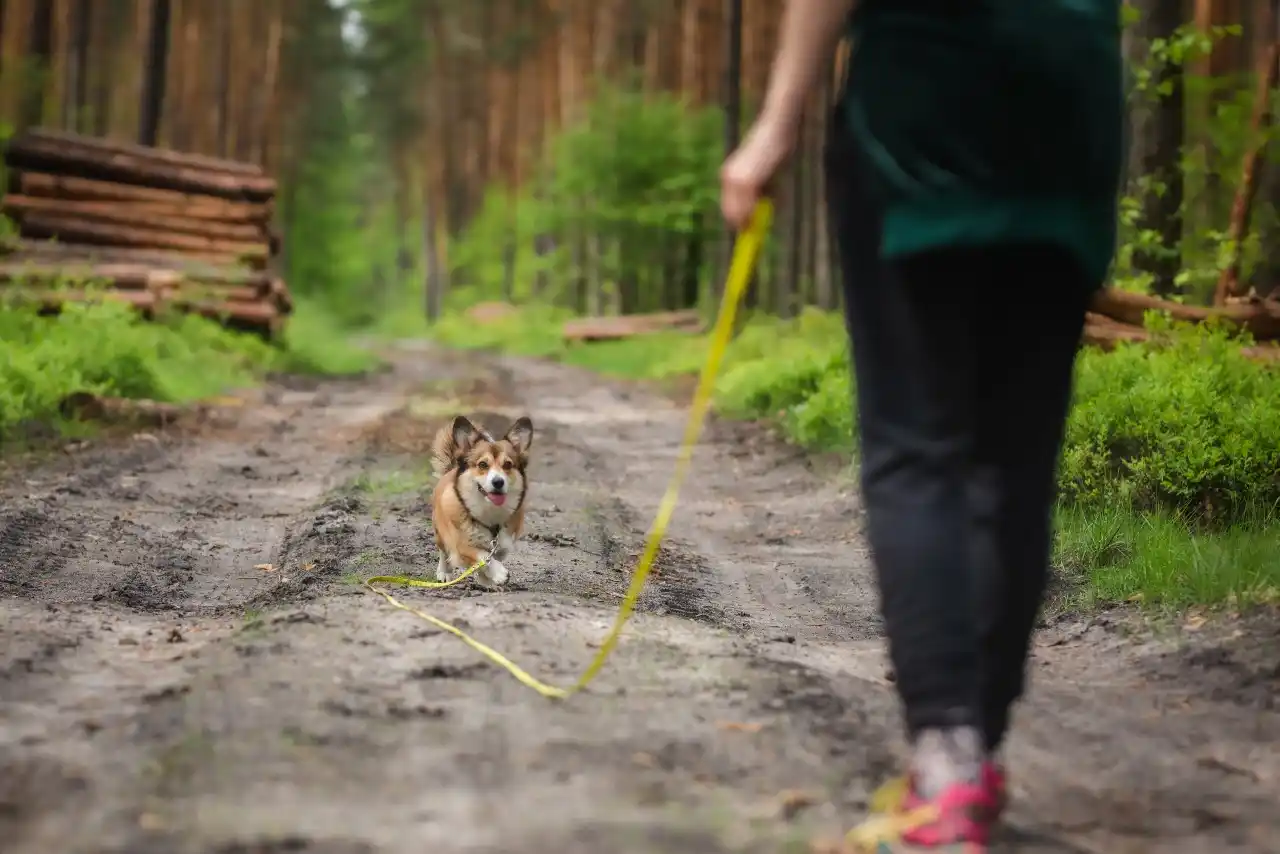
We got back to school on getting your dog to come back to you
Step 1: Rewarding returning behaviour
Keep your dog on a long line attached to the back of a good-quality, well-fitting, non restricting harness.
Start close to you, without distractions, signal your dog (call or whistle), and heavily reinforce if they turn towards, or even walk towards, you. Have a party, play a chase game, have fun but keep it short and sweet.
Wait a couple of minutes and repeat but don’t keep going until your dog gets bored; stop before they get bored.
Track your progress with distance and how often you are successful. If you are successful three times in a row, increase the distance. If you fail twice in a row, reduce the distance and create a success to finish on.
Step 2: Building distance
Next time, which could be the next day, try with your dog a little further away. Over time, increase the distance at which you are calling your dog to you. Remember, reinforce every single time – be consistent.
Step three: distractions
Then it’s time to add in distractions. This is best done with your dog close to you and the distraction at a distance, say 20m away. Incrementally increase the distance from you that you are recalling your dog, which also means they are getting closer to the distraction, too!
Step 4: recall off lead
Now it’s time to try off lead. Set yourselves up for success and start again with no distractions, maybe the back garden, again not forgetting to keep tracking progress.
To progress, try it out on walks in a field. Again, set yourselves up for success and make it easy to get it right at the beginning and gradually increase the distance away from you and as they get closer to their distractors.
Step 5: Making it a habit
Mix up going on and off a lead. Sometimes, the lead going on means a reinforcer happens, and sometimes it only goes on for a short time and the lead goes off again to repeat the training. What we don’t want is the lead going on to always predict the fun being stopped – that’s the fastest way to untrain a recall.
Fading out – reducing how often you are rewarding a dog – is where the skill comes in. When you think the dog ‘has it’, it’s time to mix the rewards up. Sometimes it’s their favourite game, sometimes it’s a yummy treat, sometimes it’s a game of chase me.