


Does your dog have a wardrobe that rivals yours? When it’s cold and wet outside, do you reach for their raincoat as well as yours? Are doggy pyjamas essential for snuggly evenings on the sofa? Perhaps you are rolling your eyes right now and chuckling at the idea of dog clothes, after all, dogs have an inbuilt fur coat, don’t they?
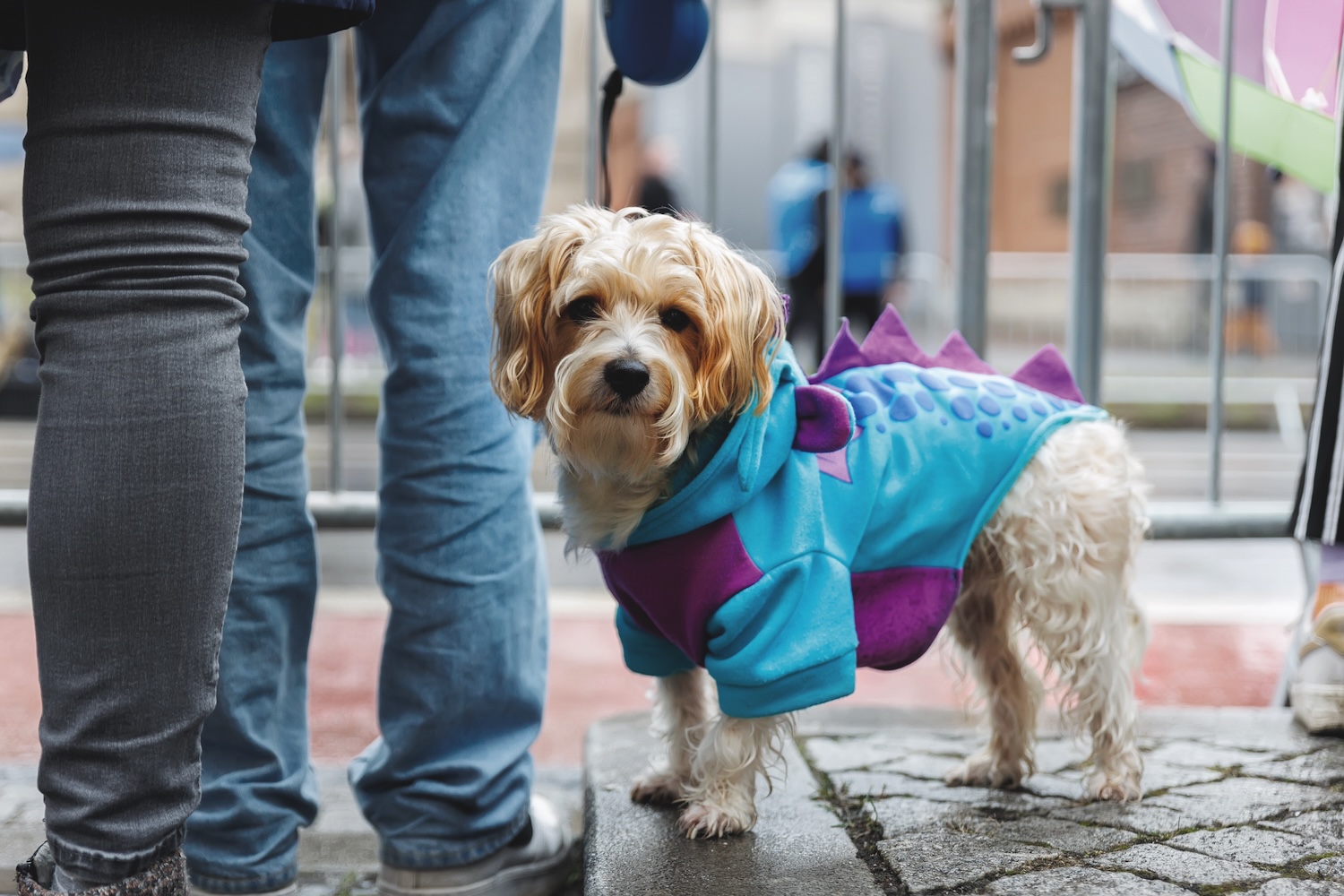
Well, dog clothes are increasing in popularity. It is much more common to see dogs wearing a range of attire, from functional to fashionable and funky. I recently treated my own dogs to new drying ‘jumpers’ – very functional, indeed. The funky part is that the jumpers are dinosaur themed, compete with scales down the spine!
Whether you are a canine clothing connoisseur, or you think the idea of dog coats and clothes crazy, let’s examine the science behind their potential value and whether they are ever actually needed.
Credit: Shutterstock
The Canine Wardrobe
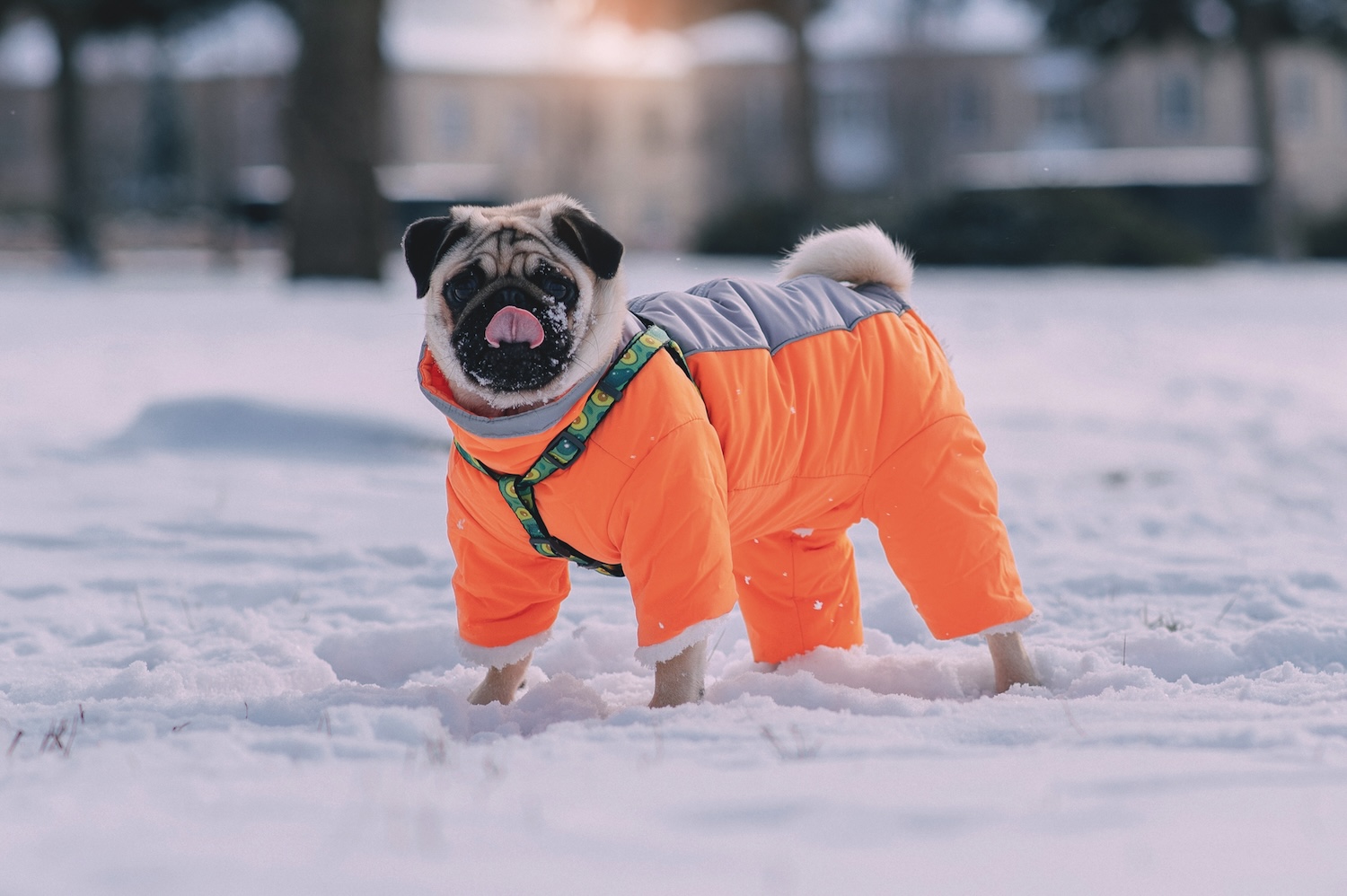
Canine clothing comes in a range of forms, fabrics, and intended functions. Waterproof coats that resemble the rugs worn by horses are widely accepted for keeping dogs dry and warm when exercising in inclement weather. You can also now purchase jumpers and bodysuits – useful for keeping dogs clean when outdoors or to dry them off after exercise, swimming, or bathing.
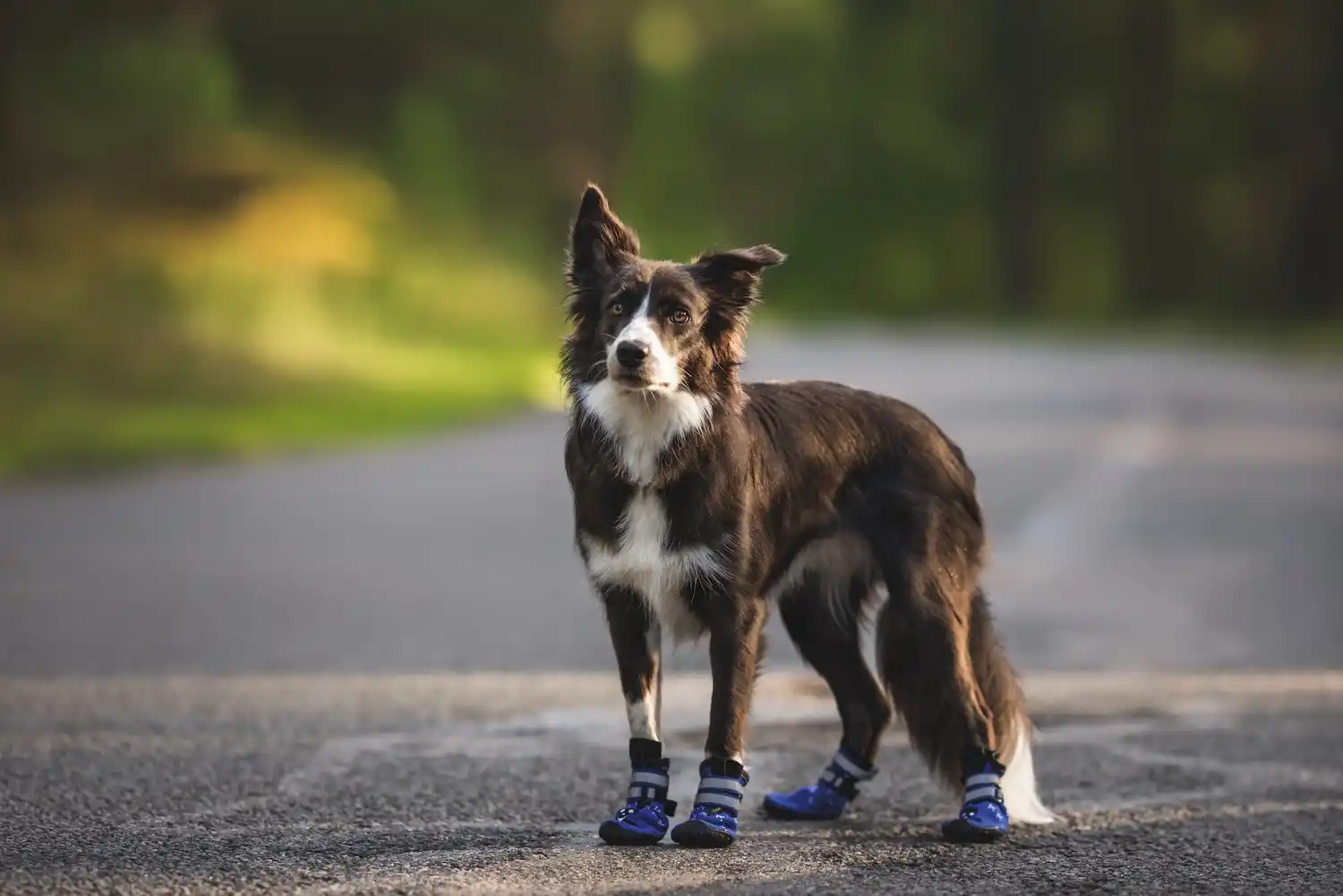
Some clothing is protective – post-surgery bodysuits can be effective at protecting wounds and are often preferable to uncomfortable plastic cones or blow-up collars. Snoods, goggles, and boots can protect ears, eyes, and feet from potential harm, especially for active, sporting, or working dogs who might be exposed to dangerous places or substances. Snoods are also often useful for noise sensitive dogs but do get your dog used to wearing one first. There are also tight fitting ‘shirts’ that can help worried dogs settle; the thought being that they mimic close contact which can be soothing and relaxing.
There is also purely fashionable dog clothing. Sometimes this is as simple as a neckerchief but can extend to designer ‘dresses’ that would not look out of place on a fashion show catwalk. These outfits tend to be less function and more fancy but are part of the daily attire of some dogs, in the same way that collars are for others.
What does the science say?
Dogs are actually able to tolerate quite a wide range of environmental conditions before they need to warm themselves up by shivering or cool themselves down by panting (dogs have only very limited ability to cool by sweating). This makes canine clothing more appropriate for maintaining warmth.
The lower critical temperature (LCT) for dogs is the environmental temperature below which they need to begin to expend energy to maintain their body temperature. When external temperatures dip below the LCT, clothing can help keep them warm and comfortable and avoid the need to expend energy for warmth generation.
Because domestic dogs diverge dramatically in shape and size, as well as their coat length and type, their LCTs also differ. For example, Malamutes have an LCT of less than 0oC. Very fine coated dogs, such as Italian Greyhounds, are extremely fine coated, making them susceptible to the cold and wet. Their LCT is also much higher (approx. 15oC) than that of Arctic breeds. Consequently, they benefit hugely from the warmth and protection of canine clothing, indoors and out.
Credit: Shutterstock
Why might you use clothes for your dog?
Very young, very old, ill, underweight, or recovering dogs often benefit from the use of clothing to help them retain body heat, even in otherwise comfortable conditions. This is because their normal body functions are not working as effectively as they normally would, and they might be less able to devote energy to maintain their body temperature.
For older dogs, and especially those with joint problems, keeping them warm with cosy coats can really help to keep them as comfortable and mobile as possible, in conjunction with other management approaches. Equally, for sporting and working dogs, keeping muscles warm before and after exercise can help support performance and recovery, too.
It might sound trite, but clothing can make your life as a canine caregiver easier, too. Wet, muddy, winter walks are much easier when you bring home your dog, remove their coat, and leave most of the wet and dirt outside, rather than in your house! Those extra few minutes saved can be used for exercise rather than cleaning.
If you are going to use clothing for your dog, do make sure you spend time getting them used to having the items put on and taken off. Also ensure that your dog can move freely when wearing them. With gentle, positive reinforcement training, most dogs will happily accept clothing. Some dogs actively seek their clothing in certain situations! These factors all need consideration when exploring the potential value of clothing.
When might canine clothing not be ideal?
Some dogs quite simply cannot cope with wearing anything beyond a normal collar. This might be a result of previous negative experiences, not being adequately supported in getting used to wearing clothing or other items, or pain and discomfort can make body parts being touched uncomfortable.
Dogs with excess bodyweight, lots of coat, or those breeds/types originating from colder climates, such as Huskies, are less likely to require, benefit from, or even tolerate clothing. Similarly, because dogs are limited in their natural cooling mechanisms, clothing can cause potentially dangerous overheating, so avoid using clothes on warm days or when unsupervised.
Unless your dog is entirely comfortable wearing clothing, take care not to leave them unattended – there is always the risk of chewing, material ingestion, or even your dog getting dangerously tangled in some items.
Clothing that is purely decorative or restrictive is also not ideal and certainly not for prolonged periods of time. It can also be considered demeaning to our dogs to dress them up in fancy dress, so choose carefully and prioritise function rather than fashion or funny.